Temple – Six-Century-Old Shrine in Gorakhpur Draws Global Devotees
Temple – Uttar Pradesh’s Gorakhpur district is home to a centuries-old temple revered for faith, folklore, and enduring spiritual belief. –
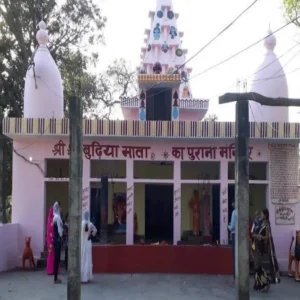
About 12 kilometers from the district headquarters of Gorakhpur, deep inside the Kusmhi forest area, stands an unusual place of worship known locally as Budhiya Mai Temple. Surrounded by dense greenery and accessible through rural pathways, the shrine has long been counted among the significant cultural landmarks of eastern Uttar Pradesh. Despite its secluded setting, the temple attracts devotees not only from across India but also from abroad, many of whom arrive with deep faith in the deity’s protective blessings.

Local belief holds that those who offer prayers here with sincerity are shielded from untimely death. Devotees consider Budhiya Mai a guardian figure who watches over her followers in moments of crisis.
History Rooted in Tribal Traditions
Oral accounts trace the temple’s origins back nearly 600 years. According to tradition, the shrine honors a mysterious elderly woman dressed in white who was often seen walking with the support of a stick. In earlier centuries, members of the Tharu community are believed to have lived in this forested region. They worshipped a forest goddess by establishing three sacred mounds, or pindis, in the jungle.
Residents of that time reportedly noticed an old woman appearing briefly near the pindis before vanishing without a trace. Over time, these sightings became central to local faith, and the figure came to be revered as Budhiya Mai.
Legend of the Broken Wooden Bridge
One of the most widely recounted stories associated with the temple dates back several centuries. It speaks of a wedding procession traveling through the forest, crossing a wooden bridge built over the Turra stream. Among the group was a dancer. Before the procession could cross, an elderly woman is said to have requested that the dancer perform.
Members of the procession reportedly dismissed the request, citing delays, and proceeded toward the bridge. However, a jester traveling with the group obliged and performed a brief dance. According to local lore, the elderly woman then warned him not to step onto the bridge with the others.
Moments later, as the wedding party began crossing, the wooden structure collapsed, sending the group into the stream below. The jester, who had heeded the warning, survived. Villagers later associated the incident with the divine intervention of Budhiya Mai. Since then, both sides of the stream have been regarded as sacred, and two temple structures now stand facing each other across the water. Devotees typically cross the narrow channel by boat when visiting both shrines.
A Second Tale of Revival and Faith
Another story linked to the temple centers on the fulfillment of wishes. It recounts the death of a man named Jokhu Sokha from a nearby village. After his passing, his body was set afloat in the Turra stream as part of local customs. According to tradition, the body drifted near the sacred pindis worshipped by the Tharu community.
At this point, Budhiya Mai is believed to have appeared and restored him to life. Grateful for what he described as a divine encounter, Jokhu is said to have dedicated himself to worship at the site. He later installed an idol reflecting the form in which he claimed to have seen the deity and helped establish a formal temple structure.
Navratri Brings Thousands of Visitors
Although the temple is situated within a forested zone, it becomes a vibrant center of devotion during Navratri. The festival period sees a steady flow of pilgrims who gather to offer prayers and seek blessings. The atmosphere resembles a fair, with stalls, devotional songs, and organized rituals marking the celebration.
Recognizing its cultural and spiritual importance, authorities have taken steps toward preserving the site. The state’s tourism department has been assigned responsibility for conservation and beautification efforts, aiming to maintain the heritage value while improving visitor facilities.
Today, Budhiya Mai Temple remains a unique blend of folklore, tribal history, and enduring faith—an enduring symbol of Gorakhpur’s spiritual landscape.