The divine story of Ekambareswarar Temple: The sacred abode of Lord Shiva representing the element of Earth
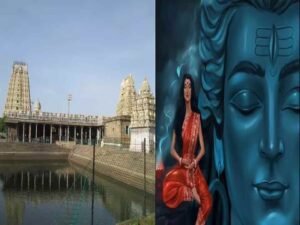
The Divine Story of Ekambareswarar Temple: Located in the ancient city of Kanchipuram in Tamil Nadu, the Ekambareswarar Temple is a vibrant symbol of Indian culture, faith, and mythological traditions. This temple is one of the sacred sites of Lord Shiva where Shiva is worshipped in the form of the earth element. The lingam installed here is called Baluka Lingam, believed to be made of sand. This temple is not only famous for its religious significance but also for its historical, architectural, and spiritual features that make it unique.
Historical Significance of the Temple
The history of the Ekambareswarar Temple is believed to be approximately a thousand years old. Its initial construction was carried out by the rulers of the Chola dynasty in the 9th century. Later, the rulers of the Vijayanagara Empire made significant contributions to the expansion and beautification of the temple. The massive gopurams (gateway towers) in the temple complex, especially the southern gopuram, showcase its grandeur. This gopuram is considered one of the tallest temple gateways in India and attracts devotees from afar.
The Earth Element and the Pancha Bhoota Sthalam
According to Hindu belief, the five principal sites of Lord Shiva are associated with the five elements, known as Pancha Bhoota Sthalam. The Ekambareswarar Temple represents the earth element. Here, the Shiva Lingam is worshipped in a form made of earth and sand, symbolizing stability, endurance, and creation. For this reason, this temple holds an extremely important place in the Shaivite tradition.
The Ancient Mango Tree and its Associated Legend
The massive mango tree located in the temple complex is one of the most unique features of this place. It is believed that this mango tree has been present here for thousands of years. It is said that four different types of mangoes grow on its four main branches, each with a different taste. This tree is not just a natural heritage but also a witness to a mythological legend.
According to the legend, Goddess Parvati performed penance under this very mango tree. Situated on the banks of the Vegavathi River, Goddess Parvati performed rigorous penance at this spot to attain liberation from her sins and to unite with Lord Shiva. To test her devotion, Lord Shiva subjected her to a difficult trial by fire. At that time, Goddess Parvati prayed to Lord Vishnu for help, and the intensity of the fire was calmed by the cool rays of the moon. This incident reflects Goddess Parvati’s unwavering faith and patience.
The Incident Related to the Ganges
According to the legend, Lord Shiva, to test Goddess Parvati’s penance, sent the Ganges River in a furious torrent to disrupt her meditation. Goddess Parvati humbly requested the Ganges, addressing her as a sister, not to obstruct her penance. At the Goddess’s request, the Ganges calmed down, and her meditation remained undisturbed. This incident is considered a symbol of compassion, humility, and inner strength.
Establishment of the Baluka Lingam
During her penance, Goddess Parvati created a Shiva Lingam out of sand and worshipped Lord Shiva. This Shiva Lingam later became famous as the Baluka Lingam. This Lingam is worshipped with a special ritual, as it is not consecrated with water, but only adorned with gentle touches and ornaments. This tradition is still observed with great devotion today.
The Story of Shiva and Parvati’s Marriage
According to another belief, during her penance, Lord Shiva created a fierce flood in the Vegavati River, threatening to wash away the Baluka Lingam. Goddess Parvati then embraced the Shiva Lingam to protect it. Lord Shiva was extremely pleased by this act and granted her his divine vision. The Goddess asked for the boon of marriage, which Lord Shiva accepted. The story of the sacred union of Shiva and Parvati originated at this very place.
Brahmotsavam and Shivavivaha Festival
In commemoration of this mythological story, a grand Brahmotsavam festival is celebrated every year. On this occasion, the idols from the Ekambareshwar Temple and the nearby Kamakshi Temple are brought to the sacred mango tree. Here, a symbolic wedding ceremony of Shiva and Parvati is performed, which is called the Shivavivaha Kalyanam. Devotees from far and wide participate in this festival, and the atmosphere is filled with devotion.