Sacred Sisters of Mithila: The Untold Legacy of Sita and Her Three Revered Sisters
Sacred Sisters of Mithila: In the epic narrative of the Ramayana, the life of Sita stands as a timeless symbol of virtue, resilience, and spiritual strength. While Sita is widely honored as the embodiment of ideal womanhood, the legacy of her three sisters—Urmila, Mandavi, and Shrutakirti—is equally profound. Their lives reflect quiet courage, unwavering devotion, and deep moral commitment. Together, these four sisters from Mithila shaped not only royal alliances but also enduring values within Indian cultural and spiritual thought. Their stories deserve careful reflection, as each sister contributed uniquely to the greatness of the Ramayana tradition.
Who Was Sita and How Many Sisters Did She Have?
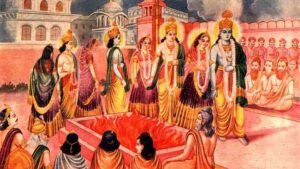
Sita is revered in Hindu tradition as the wife of Rama, regarded as an incarnation of Lord Vishnu. According to sacred texts, she was discovered by King Janaka of Mithila while ploughing the earth, which earned her titles such as Bhoomija and Daughter of the Earth. Beyond her personal journey, Sita was part of a family of four sisters. Her younger sisters—Urmila, Mandavi, and Shrutakirti—were raised with the same values of dharma, humility, and devotion. All four sisters were married to the four princes of Ayodhya, creating a rare bond of unity between two great royal lineages.
Urmila: The Silent Strength of Sacrifice
Urmila, the wife of Lakshmana, represents one of the most profound examples of selfless sacrifice in epic literature. When Rama, Sita, and Lakshmana departed for fourteen years of exile, Urmila wished to accompany her husband. However, understanding the greater duty placed upon Lakshmana, she accepted separation without protest. During this long period, Lakshmana remained constantly awake to protect Rama and Sita. Tradition holds that Urmila absorbed Lakshmana’s share of sleep, entering a deep slumber so that he could remain vigilant. This extraordinary act was not driven by recognition or reward but by pure devotion. Urmila later became the mother of Angada and Chandraketu, continuing her legacy through her children. Her life teaches that sacrifice does not always require visibility to be meaningful.
Mandavi: Grace in Austerity and Devotion
Mandavi, daughter of King Kushadhwaja and wife of Bharata, exemplified dignity through simplicity. When Bharata refused to rule Ayodhya in Rama’s absence and chose a life of renunciation at Nandigram, Mandavi stood firmly beside him. She embraced an austere lifestyle, sharing in her husband’s vows and responsibilities. Mandavi never sought comfort or status; instead, she found purpose in supporting Bharata’s devotion to Rama. Her sons, Taksha and Pushkala, later carried forward the values of discipline and righteousness. Mandavi’s story highlights the strength found in companionship and the quiet power of shared ideals.
Shrutakirti: Devotion Rooted in Duty
Shrutakirti, the youngest of the four sisters, was married to Shatrughna, the most devoted follower of Rama among his brothers. Though references to her are fewer in traditional retellings, her role remains significant. Shrutakirti supported Shatrughna in fulfilling his duties, including his campaign against the demon Lavanasura and the governance of Madhupuri. She embodied loyalty, gentleness, and steadfast commitment to family harmony. As the mother of Shatrughati and Subahu, she ensured the continuation of righteous values within the lineage. Shrutakirti’s life reminds us that influence is not always measured by prominence but by consistency in virtue.
The Collective Spiritual Legacy of Four Sisters
Together, Sita, Urmila, Mandavi, and Shrutakirti represent a complete spectrum of feminine strength—courage, patience, sacrifice, and devotion. Their marriages united Mithila and Ayodhya not only politically but spiritually. Each sister accepted her destiny with grace, transforming personal challenges into paths of higher purpose. Their lives reinforce the idea that dharma is upheld not only through heroic acts but also through everyday choices rooted in integrity and love.
Conclusion
The story of Sita and her three sisters enriches the Ramayana with layers of emotional depth and moral insight. While Sita’s trials are widely remembered, the silent sacrifices of Urmila, the steadfast devotion of Mandavi, and the disciplined loyalty of Shrutakirti complete the narrative of Mithila’s sacred daughters. Together, they remain worthy of reverence, offering timeless lessons on duty, faith, and inner strength that continue to inspire generations.