The Hindu God Stories
Mokshada Ekadashi: A fast that liberates ancestors from hell and guides them to heaven
Mokshada Ekadashi: In Hinduism, the Ekadashi fast is considered the most sacred and fruitful. Among these, the Ekadashi of the bright fortnight of Margashirsha holds a very high place because it was on this day that Lord Krishna imparted the nectar of the Bhagavad Gita to Arjuna.
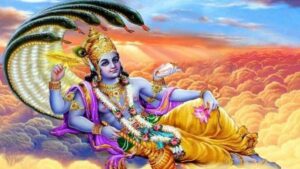
Therefore, it is also called Gita Jayanti. But this Ekadashi has another name – Mokshada Ekadashi. This directly means “the one that grants liberation.” It is believed that fasting and worship performed on this day not only absolves one of all sins but also liberates ancestors from the torments of hell and grants them a place in heaven. What does the mythological story of Mokshada Ekadashi say? In ancient times, there was a beautiful city named Gokul.
A righteous king named Vaikhanas ruled there. The people considered him like a son, and the king also took great care of his subjects. One night, the king had a dream that his deceased father was suffering terrible torments in hell. His father cried out to him piteously, “Free me from here!” Upon waking up, the king became restless. He immediately went to the learned Brahmins and recounted the entire dream. He said, “Now there is no joy in the kingdom, nor in wealth, nor in my wife and children. My father is suffering in hell; how can I be happy? Please tell me a way to liberate my ancestors.” Parvata Muni reveals the reason for going to hell The Brahmins said,
“There is an ashram of Parvata Muni nearby; he is a knower of the past, present, and future.” The king immediately went to the ashram. Many sages and ascetics were engrossed in penance there. The king bowed down to Parvata Muni and narrated his entire plight. The sage meditated and said, “O King! Your father is suffering in hell because of the injustice he committed against a woman in his previous life. He had relations with one wife, but he did not touch his other wife even during her fertile period. This sin led to his downfall.” The king prayed with folded hands, “O revered sage, please tell me a solution.” “It is a son who liberates his parents and ancestors.” Liberation through the Ekadashi fast Parvat Muni smiled and said, “Observe the fast of Margashirsha Shukla Ekadashi according to the prescribed rituals.
Keep vigil at night, worship Lord Damodar, and dedicate all the merit of the fast to your ancestors. By the power of this single fast, your father will be immediately freed from hell and go to heaven.” The king did exactly as instructed. He observed a strict fast with his family, and spent the night singing hymns and devotional songs.
The next day, he fed Brahmins, gave alms, and dedicated all the merit to his father. Suddenly, a divine voice was heard, and the king’s father appeared in a divine form. He blessed his son – “Son! By this virtuous act of yours, I have been freed from the bondage of hell. Now I am going to heaven. May you be blessed!” Saying this, he ascended to heaven in a celestial chariot. Why do people still observe this fast today? Since then, the belief has prevailed that merely observing the Mokshada Ekadashi fast yields the fruit of hundreds of yajnas (sacrifices) and penances. All sins are destroyed, the ancestors of the family are satisfied, and ultimately, one attains the highest liberation.
This fast is especially beneficial for those who experience signs of ancestral unrest in their homes – recurring bad dreams, constant discord in the family, obstacles in business, etc. When is Mokshada Ekadashi this year? (2025) In 2025, Mokshada Ekadashi falls on Thursday, December 11th. Breaking the fast between 7:20 AM and 9:25 AM on December 12th will be auspicious. Reciting the Bhagavad Gita and performing special worship of Lord Vishnu on this day also holds great significance. A person who observes this Ekadashi fast with a sincere heart opens the doors of heaven not only for themselves but also for their ancestors of seven generations. Therefore, it is also called the “Great Vow for the Liberation of Ancestors.”