Burning faith in the hills of Himachal: The unsolved mystery of Jwala Devi Temple
Burning faith in the hills of Himachal: Himachal Pradesh is known throughout the country for its natural beauty, serene environment, and spiritual sites. Nestled amidst these hills is a temple that is not only a center of religious faith but also holds a mystery that has yet to be fully understood. This is the Jwala Devi Temple, where worship takes place without an idol, and where a flame emanating from the earth has been burning continuously for centuries.
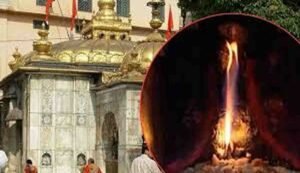
A Unique Temple Without an Idol
Most temples in India house idols of deities, but the Jwala Devi Temple is completely different. Here, no idol is worshipped; instead, devotees witness natural flames rising from the ground. These flames spontaneously emerge from between the rocks and burn continuously, day and night, unaffected by rain or strong winds. This unique characteristic makes the temple extremely mysterious and captivating.
The Mythological History of Jwala Devi Temple
The history of the Jwala Devi Temple is deeply intertwined with mythological tales. It is believed to be one of the Shakti Peethas (sacred sites of the goddess Shakti). According to legend, when Goddess Sati self-immolated and Lord Shiva began performing the Tandava dance with her body, Lord Vishnu used his Sudarshan Chakra to divide Sati’s body into several parts. It is said that Sati’s tongue fell at this spot. Therefore, the presence of Shakti is believed to reside here, and the fire is considered a manifestation of the goddess.

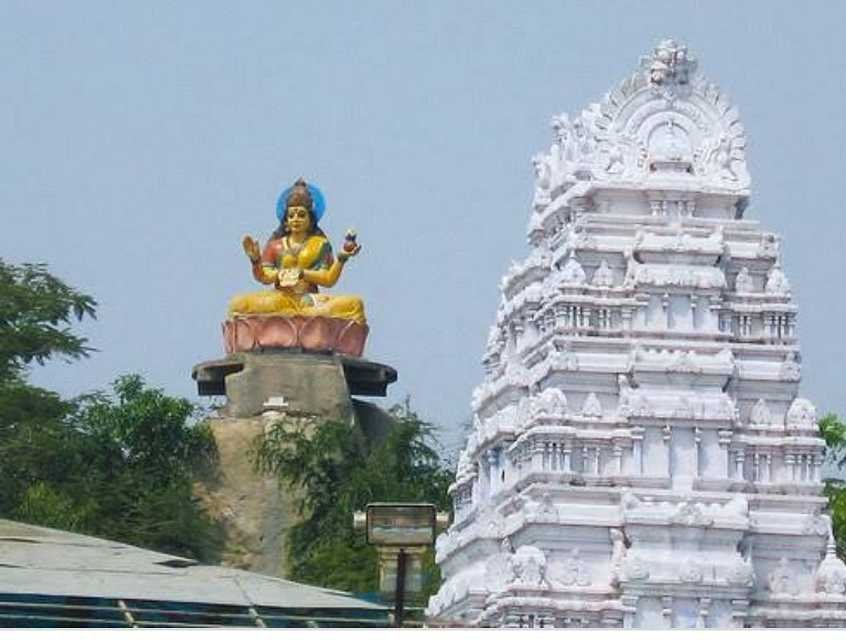
Stories Connected to the Pandavas and the Mughal Period
It is also believed that the Pandavas built this temple during their period of exile. Furthermore, a story connected to the Mughal Emperor Akbar is quite famous. It is said that Akbar tried to extinguish these flames but failed. Later, as a mark of respect to the goddess, he offered a golden canopy to the temple, which mysteriously transformed into another metal. After this incident, Akbar’s faith in the goddess deepened.
The Spiritual Significance of Jwala Devi Shakti Peetha
The Jwala Devi Temple holds a special place as a Shakti Peetha. Here, not one, but nine different flames burn, which are considered symbolic of the nine forms of the goddess. Devotees believe that the power of the goddess resides in these flames, and that merely seeing them fulfills wishes. This place is especially significant for those seeking spiritual peace and inner energy.
Scientific Perspective and Mystery
While devotees consider it a manifestation of the goddess’s grace, scientists attribute it to natural gas. For many years, scientists have conducted research in this area and even carried out deep excavations, but the clear source of the gas could not be found. This is why this place continues to be a bridge between science and faith.
The Significance of Jwala Devi Temple Today
Today, Jwala Devi Temple is not just a religious site, but also one of the major tourist destinations in Himachal Pradesh. Devotees and tourists from India and abroad visit this place. During Navratri, special events and fairs are held at the temple, which also boosts the local culture and economy. This temple is a living example of faith, tradition, and mystery.
How to Reach Jwala Devi Temple
Information on Reaching by Road
Jwala Devi Temple is located in the town of Jawalamukhi in the Kangra district. It is approximately 30 kilometers from Kangra and about 56 kilometers from Dharamshala. Taxis and buses are easily available by road.
Traveling by Train
The nearest railway station is Kangra, which is about 28 kilometers from the temple. From the station, you can reach the temple by taxi or local bus.
For Travelers Arriving by Air
Gaggal Airport, located near Dharamshala, is the closest airport to the temple. From here, it is easy to reach Jwala Devi Temple by taxi or bus.
Best Time to Visit Jwala Devi Temple
The temple is open daily from 5 AM to 11 PM. You can visit at any time of the year, but the atmosphere is especially devotional during Navratri. If you are on a spiritual journey to Himachal Pradesh, you must visit this temple.