Bhasm Aarti Kyon Hoti Hai: The Sacred Mystery of Bhasma Aarti at Mahakaleshwar Temple
Bhasm Aarti Kyon Hoti Hai: India has long been regarded as a land where spirituality, devotion, and ancient traditions coexist with profound philosophical meaning. Among its countless sacred practices, the daily Bhasma Aarti performed at the Mahakaleshwar Jyotirlinga in Ujjain stands out as a ritual that blends devotion with deep metaphysical symbolism. This centuries-old ceremony attracts devotees from across the world, yet few truly understand why sacred ash is offered to Lord Shiva and what spiritual ideas lie beneath this practice. This article explores the cultural, philosophical, and spiritual layers of the Bhasma Aarti tradition.
Historical Significance of Mahakaleshwar Jyotirlinga
Mahakaleshwar is one of the twelve revered Jyotirlingas, and its significance lies in the very meaning of the term Mahakal—one who transcends time. According to ancient scriptures, Lord Shiva manifested in Ujjain as Mahakal to protect the region from the tyranny of the demon Dushan. The Jyotirlinga that emerged here became a symbol of Shiva’s power over time, death, and the material world. It is also believed to be the only Jyotirlinga where Shiva is worshipped in the form of sacred ash, signifying both creation and dissolution.
What Is Bhasma Aarti
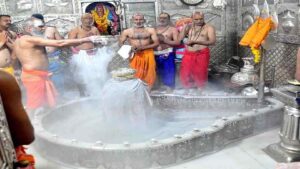
The Bhasma Aarti, performed before sunrise each day, is a ritual in which the Shiva Lingam is adorned with purified sacred ash. In earlier times, this ash was collected from the funeral pyres of the cremation ground, symbolizing the divine relationship between Shiva and the impermanence of life. Today, in accordance with temple regulations, specially prepared holy ash is used. The aarti begins in the Brahma-Muhurt hour, when the sound of mantras, drums, conch shells, and Vedic chants fills the sanctum, creating an atmosphere charged with spiritual energy. Only male devotees are permitted to witness the ritual directly, while women can attend immediately after the ceremony concludes.
The Spiritual Meaning Behind the Sacred Ash
The core idea of Bhasma is dissolution. It represents the destruction of ego, attachment, pride, and the illusion of permanence. Shiva’s ash-smeared form communicates the truth that life is temporary and that liberation lies in realizing the immortality of the soul. When the deity is adorned with ash during the aarti, it symbolizes that every worldly achievement eventually returns to dust. This simple yet profound message forms the heart of the ritual and makes the Bhasma Aarti a spiritual lesson rather than a mere ceremonial practice.
Ritual Procedure of the Bhasma Aarti
Preparations for the aarti begin late at night. Priests first perform an elaborate ritual bath using milk, curd, honey, ghee, and sacred water. The deity is then dressed and decorated with sandalwood, flowers, and the sacred ash. The application of ash follows a specific pattern accompanied by mantras that invoke divine energy. After the decoration is complete, the aarti is performed with the recitation of Shiva Tandava Stotra and Rudrashtakam. Devotees who witness this ceremony describe it as an overwhelming and transformative experience, bringing a sense of purity and spiritual clarity.
Traditional Beliefs Associated with the Ritual
Across centuries, several beliefs have been linked with the Bhasma Aarti. The ancient use of cremation ash represented Shiva’s role as the lord of both life and death. The ash also symbolized renunciation and detachment, reminding devotees of the virtues of simplicity and spiritual discipline. Many saints regard the energy of the aarti as a catalyst for inner awakening, claiming that it frees the mind from the fear of death and deepens meditation.
Philosophical Connection Between Mahakal and Time
Mahakal is often described as the force beyond time. The Bhasma Aarti demonstrates that everything in the universe is ultimately consumed by time except the one who seeks refuge in the supreme consciousness. Lord Shiva, therefore, is regarded as the destroyer of death itself, guiding devotees toward liberation from the cycle of birth and rebirth.
Scientific Perspective on the Use of Ash
Beyond its symbolism, the ritual also holds scientific relevance. Ash contains carbon elements that help maintain body temperature and energy balance, which explains why ascetics apply it during meditation. The rhythmic chants and resonant sounds produced during the aarti activate alpha waves in the brain, enhancing concentration and mental harmony.
The Transformative Experience of Devotees
Devotees who attend the Bhasma Aarti often describe it as a moment beyond words. The vibration of drums, the echo of conch shells, and the visual sight of holy ash rising in the sanctum create a spiritual ambience that leaves one deeply moved. Many feel as if they are experiencing the presence of Shiva in his most intense and divine form.
Realization of the Ultimate Truth
The Bhasma Aarti is not merely a ritual but a reminder of life’s ultimate truth—the body is mortal, but the soul is eternal. Accepting this truth is considered the first step on the path of Shiva. The ritual teaches that death is not an end but a transition, and those who understand this gain clarity about the true purpose of life.