Ramayana – The Enduring Devotion of Shabari Mata
Ramayana – Shabari Mata holds a respected place in Indian mythology, especially in the epic Ramayana, where her unwavering faith in Lord Rama is remembered as a powerful example of pure devotion.
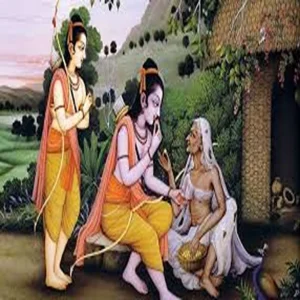
Shabari is described in the ancient epic Ramayana as a humble tribal woman who lived in the forest and dedicated her life to spiritual service. Though she came from a simple background and had very little in terms of material wealth, her faith and patience elevated her to a revered position in Hindu religious tradition. Her story appears in the Aranya Kand of the epic, where her meeting with Lord Rama becomes one of the most touching episodes in the narrative.


A Life of Waiting and Faith
According to the Ramayana, Shabari spent many years in a forest hermitage, serving her guru with complete sincerity. After her teacher’s death, she continued to live in the same place, believing firmly that one day Lord Rama would visit her. Her daily routine reflected this hope. She would clean the path leading to her hut and gather fruits, preparing herself for the moment she believed was destined to arrive.
Shabari’s background as a tribal woman is significant in the larger social context of the epic. At a time when social divisions were deeply rooted, her spiritual stature challenged conventional ideas of status and privilege. Her devotion, rather than her social identity, defined her place in the story.
The Meeting in the Forest
The most well-known moment in Shabari’s life unfolds during Lord Rama’s exile. As Rama and his brother Lakshmana were traveling through the forest in search of Sita, they reached the hermitage where Shabari lived. Overwhelmed with emotion, she welcomed them with deep respect and offered them forest berries.
Before presenting the berries to Rama, Shabari is said to have tasted each one to ensure it was sweet. In ordinary circumstances, offering tasted fruit would be considered improper. Yet, in this instance, the act symbolized her pure concern and affection. Lord Rama accepted the berries with gratitude, recognizing the sincerity behind the gesture.
This episode has been retold for generations as a symbol of unconditional love and devotion. It highlights the belief that true faith is measured not by ritual formality but by heartfelt intention.
Symbol of Equality and Spiritual Inclusion
Shabari’s story carries broader social and spiritual meaning. Her interaction with Rama emphasizes that devotion transcends social boundaries. The acceptance of her offering by Rama is often interpreted as a message of equality and compassion. It underscores the idea that divine grace is not limited by caste, wealth, or status.
For many followers, Shabari represents patience and steadfast belief. She waited for years without doubt or frustration, holding on to the promise of divine arrival. Her life is frequently cited in spiritual discourses as an example of how faith combined with humility can shape one’s destiny.
Continuing Relevance in Modern Times
Even today, Shabari Mata’s devotion is remembered in religious gatherings, spiritual teachings, and cultural retellings of the Ramayana. Temples and pilgrimage sites associated with her are visited by devotees who see her as a symbol of sincere bhakti. Her story remains part of India’s oral and literary traditions, reinforcing values of humility, dedication, and equality.
In a world often divided by differences, the narrative of Shabari offers a reminder that compassion and sincerity remain central to spiritual life. Her simple act of offering berries has endured for centuries, not because of grandeur, but because of the depth of feeling it represented.