Religion – Yogi Adityanath Cautions Against ‘Kalnemi’ Forces Within Sanatan Fold
Religion – In the Treta Yuga, when Lord Ram was sent into exile for fourteen years and Sita was abducted by the Lanka king Ravana, the epic battle that followed became one of the most defining moments in Hindu mythology. During that war, Lakshman was grievously wounded by Meghnad’s weapon, and it was in that dramatic sequence that the demon Kalnemi’s name emerged. Though described in scriptures as having been slain in Satya Yuga and later associated with events in Dwapar Yuga, Kalnemi has unexpectedly resurfaced in modern discourse — not as a mythological figure, but as a metaphor in a political and religious debate.
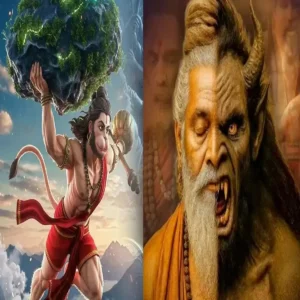
Chief Minister’s Remarks Stir Discussion
Uttar Pradesh Chief Minister Yogi Adityanath recently invoked the name Kalnemi while addressing a gathering, drawing attention to what he described as individuals acting against the core values of Sanatan Dharma. He stated that for a true saint, nothing stands above religion and the nation. According to him, a saint possesses no personal wealth; faith is his only asset, and the nation is his honor.
Without naming anyone directly, the Chief Minister warned that certain people operate under the guise of religion while allegedly weakening Sanatan traditions from within. He likened such elements to “many Kalnemis,” suggesting they mislead followers and distort religious principles for personal or ideological gain. He urged vigilance and called for identifying and countering such influences.
His comments quickly gained traction across political and religious circles, prompting debate about their broader implications.
Magh Mela Incident in Prayagraj
The backdrop to these remarks appears to be a recent controversy involving Swami Avimukteshwaranand during the Magh Mela in Prayagraj. On January 18, 2026, coinciding with Mauni Amavasya, a significant bathing day at the Sangam, authorities restricted certain movements in the fair area due to crowd management and security concerns.
According to officials, access to the Sangam zone was limited to pedestrians in order to prevent congestion and ensure public safety. During this period, the palanquin carrying Swami Avimukteshwaranand was stopped from proceeding to the riverbank. The decision, taken by the mela administration, was described as a precautionary measure.
However, the swami expressed strong displeasure over the incident. Viewing the restriction as disrespectful, he began a sit-in protest, drawing attention from devotees and media alike. The protest has since become a focal point of discussion within religious communities in Uttar Pradesh.
Political and Religious Reactions
Although the Chief Minister did not explicitly connect his statement to the Magh Mela episode, observers have interpreted his “Kalnemi” remark in the context of the ongoing dispute. Supporters argue that his comments reflect a broader message about preserving religious integrity and discipline during major events that involve large public gatherings.
Critics, on the other hand, believe the timing of the statement has added to the tension surrounding the Magh Mela controversy. They have called for dialogue and clarity to avoid misunderstandings within the religious fraternity.
The Prayagraj Magh Mela is one of the largest annual religious congregations in India, attracting millions of pilgrims. Managing such vast crowds requires strict security protocols and coordination among various agencies. Officials maintain that their actions were guided solely by public safety considerations.
Mythology as Metaphor in Modern Debate
The invocation of mythological characters in contemporary discourse is not new in Indian politics. Figures like Kalnemi, Ravana, and others often serve as symbolic references to moral or ideological conflicts. In this instance, the comparison appears to underline concerns about internal divisions within religious institutions.
As the situation unfolds, both the state administration and religious leaders are expected to address the concerns raised. For many observers, the episode highlights the delicate balance between faith, public administration, and political expression in a diverse society.