Navratri – Seventh Day Devotion Dedicated to Fierce Goddess Kalratri
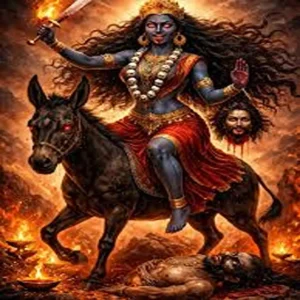
Navratri – The seventh day of Chaitra Navratri holds special significance as devotees across the country offer prayers to Goddess Kalratri, one of the most powerful forms of Goddess Durga. Known for her intense and fearsome appearance, Kalratri symbolizes the destruction of darkness and evil forces. Religious texts describe her form as dark as the night, with three radiant eyes and unkempt hair, reflecting her role as a protector against negativity.
Significance of Goddess Kalratri Worship
On this day, devotees perform rituals dedicated to seeking protection from fear, sorrow, and untimely dangers. Goddess Kalratri is believed to remove obstacles and grant courage to her followers. Her fierce form may appear terrifying, but she is also considered deeply compassionate towards her devotees. Worshipping her with devotion is said to bring peace, strength, and spiritual growth.
According to traditional beliefs, her blessings help eliminate suffering and safeguard individuals from unexpected hardships. Many devotees observe fasts and perform special prayers to honor her presence during Navratri.
Iconography and Divine Representation
Goddess Kalratri is depicted with four arms. In two hands, she carries weapons—a sword and an iron hook—symbolizing her power to destroy evil. Her other two hands are in protective and blessing gestures, assuring devotees of safety and prosperity. She is often shown riding a donkey, which further represents humility and resilience.
Her appearance, though intense, carries a deeper spiritual meaning. It signifies the removal of ignorance and the triumph of light over darkness. Devotees believe that surrendering to her divine energy leads to inner transformation and fearlessness.
Rituals and Devotional Practices
On the seventh day of Navratri, worshippers begin the day with cleansing rituals and offer prayers using flowers, incense, and sacred chants. Reciting the vrat katha associated with Goddess Kalratri is considered an important part of the पूजा. It is believed that listening to or reading the story with faith helps devotees overcome past mistakes and attain spiritual clarity.
Many households and temples organize special aarti ceremonies in the evening. These rituals mark the completion of the day’s worship and are performed with deep reverence.
Aarti Recitation and Its Importance
The aarti dedicated to Goddess Kalratri is an essential part of the पूजा. Devotees sing praises describing her strength, protective nature, and divine presence across the universe. The hymn highlights her role as a destroyer of evil and a guardian of righteousness.
The verses of the aarti reflect devotion and gratitude, emphasizing that those who seek her blessings are protected from suffering, illness, and fear. It also conveys that her grace ensures a life free from major troubles and anxieties.
Faith and Spiritual Belief
Religious traditions suggest that those who worship Goddess Kalratri with sincerity are shielded from negative influences. Her divine power is believed to remove fear and provide a sense of security. Devotees often express that her blessings bring stability and confidence in difficult times.
The seventh day of Navratri is not only about rituals but also about understanding the deeper spiritual meaning behind her fierce form. It teaches the importance of confronting fears and embracing inner strength.
As Navratri continues, the worship of Goddess Kalratri serves as a reminder of resilience and the ultimate victory of good over evil. Devotees conclude the day with prayers, seeking her continued protection and guidance in their lives.