Tourism – Mainpur Kot Temple Near Kushinagar Holds Deep Spiritual Legacy
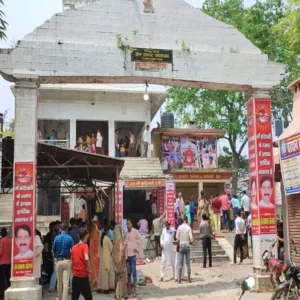
Tourism – Just about 12 kilometers to the east-southeast of Kushinagar lies Mainpur Kot Temple, a revered spiritual site located between the Khauwa and Badi rivers. The temple has long been regarded as a place of deep devotion and historical significance, attracting visitors who believe in its sacred legacy. For residents of nearby villages as well as devotees arriving from Bihar and other parts of the country, the site represents a powerful center of faith and tradition.
A Sacred Destination for Devotees Throughout the Year
Pilgrims continue to visit the temple in steady numbers throughout the year. However, during the Navratri festival the atmosphere around Mainpur Kot becomes particularly vibrant as large gatherings of devotees arrive to offer prayers and participate in religious rituals. Local residents say the temple has been a focal point of devotion for generations, and the belief in its spiritual power has only grown stronger with time.
The temple’s recognition is not limited to local traditions. Historical references to the area can be found in ancient Buddhist literature, particularly in the Sri Lankan chronicle Dipavamsa. These records highlight the cultural and religious importance of the region during the early development of Buddhist history.
Link to Ancient Kushinara and the Mall Republic
The Dipavamsa describes ancient Kushinara—today’s Kushinagar—as the capital of the Mall republic. According to the chronicle, the Mall rulers established a military camp at Mainpur, suggesting the area held strategic importance in addition to its spiritual role. The text mentions the location in connection with the period surrounding the passing of Gautama Buddha, reinforcing the historical relevance of the region.
Scholars believe that such references demonstrate how religious centers and administrative hubs often existed close to one another in ancient times. Mainpur Kot, therefore, may have served both as a sacred site and a location of practical importance for the Mall community.
Local Traditions Surrounding the Temple Deity
Local belief systems also attribute great protective power to the deity worshipped at Mainpur Kot. According to traditional accounts passed down through generations, the goddess of the temple was regarded as the protector of the Mall people. Whenever the community faced natural calamities or prepared for battle, prayers and rituals were first performed at the shrine.
Only after offering worship to the goddess would important decisions be taken or military campaigns announced. Devotees believed that the well-being of the people and the success of the kingdom depended on the blessings of the deity.
Legends Connecting the Site to the Mahabharata Era
Beyond Buddhist historical references, local folklore connects Mainpur Kot with events described in the Mahabharata. Oral traditions suggest that the Pandavas are believed to have spent some time in this region during their period of exile. In those days, the surrounding landscape was reportedly known as Devaranya, a forested area associated with sacred legends.
While historians continue to study these claims, such narratives remain an important part of the cultural identity of the region. They reflect how mythological memory and historical accounts often merge in places that have been inhabited for centuries.
Evidence of an Old Nomadic Settlement
Historical recollections also point to the presence of nomadic communities in the area. Dense cane forests once surrounded Mainpur Kot, and groups of Banjaras are said to have lived nearby for many years. These communities regarded the temple’s goddess as their family deity and regularly visited the shrine to seek blessings before traveling.
Records and local accounts indicate that Banjara settlements existed in the region until the early twentieth century. Even today, the presence of cane vegetation in the surrounding landscape serves as a reminder of that earlier period and the communities who once made the area their home.
Continuing Importance of the Sacred Site
Despite the passage of time, Mainpur Kot Temple continues to hold a special place in the spiritual life of the region. Devotees see the temple not only as a religious center but also as a symbol of the area’s historical and cultural continuity. With its connections to Buddhist texts, regional legends, and long-standing local traditions, the site remains a unique part of the heritage landscape near Kushinagar.