Spirituality – Understanding Rudra Form of Lord Shiva in Hindu Tradition
Spirituality – In Hindu belief systems, Lord Shiva is revered in multiple forms, each reflecting a distinct aspect of cosmic balance. Among these, Rudra is regarded as one of the most intense and powerful manifestations. Often associated with storms and fierce natural forces, Rudra represents a transformative energy that plays a vital role in maintaining universal order. Ancient scriptures describe Rudra not merely as a destructive force but as an essential presence that restores balance when chaos prevails.
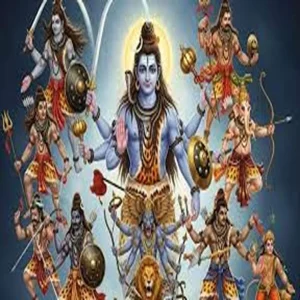
Scriptural references and meaning of Rudra
The term Rudra appears prominently in early Vedic literature, where it is used as one of the names of Shiva. Its literal meaning is often linked to a roaring storm, symbolizing power and intensity. Texts such as the Vishnu Purana, Matsya Purana, and Bhagavad Gita refer to multiple forms of Rudra, commonly known as the eleven Rudras. These forms were believed to emerge to counteract injustice and restore harmony in both earthly and divine realms.
Interpretations of the word Rudra also connect it with fire and a reddish hue, further emphasizing its association with strength and transformation. While Shiva is often depicted as calm and benevolent, Rudra reflects his fierce and uncompromising nature.
Description in devotional literature
Devotional compositions such as the Rudrashtakam describe Rudra as immensely powerful, radiant, and beyond birth. He is portrayed as holding a trident that symbolizes the destruction of the three fundamental qualities of nature—sattva, rajas, and tamas. The imagery emphasizes that Rudra’s role is not limited to destruction alone, but extends to liberation from worldly attachments.
Role within the Hindu trinity
Hindu philosophy identifies three primary divine roles: Brahma as the creator, Vishnu as the preserver, and Shiva as the destroyer. Within this framework, Rudra represents Shiva’s role in dissolution, a necessary step for renewal. This aspect is often linked to the cosmic dance known as the Tandava, performed in cremation grounds, symbolizing the cycle of life, death, and rebirth.
Iconography frequently portrays Rudra with serpents as ornaments, ashes covering his body, and a garland of skulls, reinforcing the idea of detachment from material existence and acceptance of mortality.
Mythological account of Rudra’s origin
One widely known legend describes how the sage Kashyapa sought divine intervention when celestial beings were defeated by demons. According to the narrative, Kashyapa undertook intense meditation to invoke Shiva’s presence. Pleased with his devotion, Shiva granted his wish to restore balance.
It is said that Kashyapa’s wife later gave birth to eleven sons, each embodying an aspect of Shiva. These were collectively known as the eleven Rudras, with names such as Kapali, Pingala, Bhima, Virupaksha, and others. Their emergence was seen as a turning point that brought hope to the distressed gods.
Different scriptures present variations of this origin story. Some texts attribute the Rudras to Brahma’s anger, while others describe alternative names and roles. Despite these differences, the central theme remains consistent: Rudra represents a force created to uphold order and eliminate imbalance.
Dual nature of Shiva and Rudra
The relationship between Shiva and Rudra reflects a broader philosophical idea within Hinduism—the coexistence of opposing forces. Shiva is often viewed as compassionate, approachable, and a source of blessings, while Rudra embodies intensity, discipline, and transformation through destruction.
This duality highlights an essential truth: destruction is not an end but a precursor to new beginnings. Just as life inevitably leads to death, death paves the way for rebirth. Ancient texts, including the Rigveda, mention Rudra multiple times, underlining his significance as both a feared and revered deity.
Philosophical significance
The concept of Rudra goes beyond mythology and enters the realm of philosophy. It illustrates the cyclical nature of existence, where creation, preservation, and destruction are interconnected processes. Rudra’s fierce form serves as a reminder that change, though often unsettling, is necessary for growth and renewal.
Ultimately, the balance between Shiva’s calm presence and Rudra’s intensity reflects the broader harmony of the universe. Together, they symbolize how contrasting forces work in unison to sustain life and maintain cosmic order.