Mythology – Sacred Texts Describe Birth and Early Life of Lord Rama
Mythology – The epics Ramayana and Ramcharitmanas hold a central place in Indian tradition, offering two distinct yet complementary perspectives on the life of Lord Rama. While the poet-saint Tulsidas portrayed Rama as a divine incarnation in Ramcharitmanas, the sage Valmiki presented him as an ideal human being in the original Ramayana. Another notable difference lies in the narrative scope: Tulsidas concludes his account with Rama’s coronation, whereas Valmiki continues the story until Rama’s final departure from the world.
King Dasharatha’s Sacred Ritual for Heirs
According to the narrative, King Dasharatha, longing for sons, decided to perform a grand ritual. Following royal orders, a ceremonial horse was released alongside a well-equipped army. Esteemed sages, scholars, and priests were invited to conduct the ritual. At the appointed time, the king arrived at the ceremonial grounds accompanied by his guru Vashistha and the revered sage Rishyashringa.
The atmosphere during the ceremony was solemn yet vibrant, filled with the chanting of Vedic hymns and the fragrance of sacred offerings. The ritual was carried out with precision, adhering to traditional practices.
Distribution of Sacred Offering
Once the ceremony concluded, the king honored the assembled scholars and priests with gifts, including wealth, grains, and cattle. As part of the ritual’s outcome, a sacred offering in the form of sweet pudding was prepared. King Dasharatha took this offering to his palace and distributed it among his three queens.
After consuming the sacred food, all three queens conceived, marking the fulfillment of the king’s long-held wish for heirs.
Birth of the Four Princes
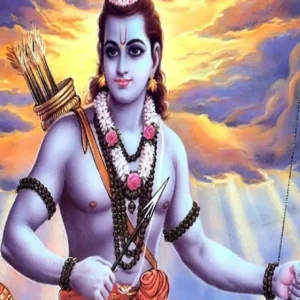
On the ninth day of the bright fortnight in the month of Chaitra, under auspicious celestial conditions, the eldest queen Kausalya gave birth to a radiant child. This child, later known as Rama, was described as exceptionally charming and full of divine brilliance.
Soon after, Queen Kaikeyi gave birth to Bharata, while Queen Sumitra was blessed with twins, Lakshmana and Shatrughna. The timing of their births was considered highly favorable, with planetary alignments regarded as significant in traditional belief.
Celebrations Across the Kingdom
The birth of the four princes brought immense joy throughout the kingdom. Festivities were held, with music and dance marking the occasion. According to tradition, celestial beings were believed to have showered flowers in celebration.
King Dasharatha distributed generous gifts among citizens, scholars, and visitors. Wealth, food, ornaments, and other valuables were shared widely, reflecting the king’s happiness and gratitude. The naming ceremony was later conducted by Sage Vashistha, who named the four princes Rama, Bharata, Lakshmana, and Shatrughna.
Early Life and Education of Rama
As the princes grew, Rama stood out for his remarkable qualities. He quickly gained mastery in various disciplines and became proficient in the use of weapons and the handling of animals and vehicles. His dedication to learning and discipline earned him admiration from both his teachers and the people of the kingdom.
Rama was known for his humility and devotion to his parents and teachers. His conduct reflected a strong sense of duty and respect, setting an example for others.
Brotherhood and Royal Pride
The other three brothers followed Rama’s example, displaying similar respect and dedication. The bond among the four siblings was marked by mutual affection and harmony. Their shared values strengthened their unity and contributed to a stable royal household.
King Dasharatha took great pride in his sons, whose virtues and character brought him immense satisfaction. Their upbringing laid the foundation for the roles they would later play in the larger narrative of the epic.