Buddhism – Life Journey of Gautama Buddha and His Global Influence
Buddhism – Gautama Buddha is widely remembered as a spiritual teacher, philosopher, and reformer who reshaped human thought with his teachings on peace and liberation. Born into a royal family, he chose a path far removed from privilege, dedicating his life to understanding human suffering and finding a way to overcome it. His message continues to guide millions across the world even today.
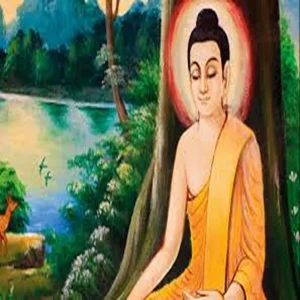
Early Life and Renunciation
Born as a prince, Siddhartha Gautama lived a life surrounded by comfort and luxury. However, exposure to the realities of aging, illness, and death deeply affected him. These experiences led him to question the purpose of life and the nature of human suffering. Despite having a young son, Rahul, and his wife Yashodhara, he made the difficult decision to leave behind his family and royal responsibilities. His renunciation marked the beginning of a lifelong spiritual quest aimed at discovering truth and inner peace.

Years of Meditation and Enlightenment
After leaving his palace, Gautama spent several years practicing intense meditation and self-discipline. He traveled across regions, learning from various teachers but remained unsatisfied with the answers he found. Eventually, he chose a middle path, avoiding both extreme austerity and indulgence.
His search reached a turning point in Bodh Gaya, Bihar, where he meditated under a Bodhi tree. After prolonged contemplation, he attained enlightenment, gaining profound insight into the nature of existence. From that moment onward, he came to be known as Buddha, meaning “the enlightened one.”
Teachings Focused on Human Suffering
Buddha’s teachings centered on understanding and overcoming suffering. He explained that desire and attachment are the root causes of human pain. By following a disciplined path of ethical living, mindfulness, and wisdom, individuals can free themselves from the cycle of birth and death.
His approach was practical and accessible, encouraging people to seek truth through personal experience rather than blind belief. This simplicity made his teachings widely accepted across different societies.
Global Spread of Buddhism
Over time, Buddhism spread far beyond its place of origin. Today, it has followers across many regions including East Asia, Southeast Asia, and parts of the West. Countries such as China, Japan, Thailand, Vietnam, Sri Lanka, and Myanmar have strong Buddhist traditions.
In addition, nations like India, Nepal, the United States, and Australia also have significant Buddhist communities. It is estimated that nearly 1.8 billion people worldwide follow Buddhism in some form, making it one of the most influential spiritual traditions globally.
Legacy as a Symbol of Peace
Gautama Buddha is often regarded as a symbol of peace and compassion. His teachings emphasize non-violence, understanding, and harmony among individuals and communities. In a world facing constant challenges, his philosophy continues to offer guidance on leading a balanced and meaningful life.
Many writers and scholars have presented his life story in simple and relatable language, making it accessible to readers of all ages. His journey from a prince to a spiritual leader remains one of the most inspiring transformations in history.