Navratri – The Mythological Battle That Defines Victory of Good Over Evil
Navratri – Navratri, one of the most widely celebrated Hindu festivals, spans nine nights and is devoted to Goddess Durga, symbolising divine feminine power. The festival is deeply rooted in the belief that righteousness ultimately prevails over evil. At the heart of these celebrations lies the ancient legend of Goddess Durga and her fierce battle with the demon Mahishasura—a story that continues to inspire faith and moral strength across generations.
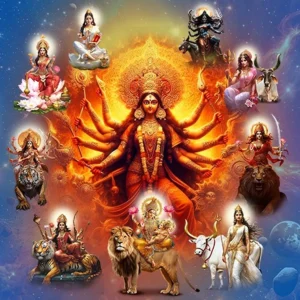
The Rise of Mahishasura’s Power
According to traditional scriptures, Mahishasura was a powerful demon known for his extreme arrogance and ambition. Through intense penance, he earned a boon from Lord Brahma that made him nearly invincible—no god, human, or demon could kill him. Empowered by this blessing, Mahishasura’s pride grew uncontrollably, and he began to unleash chaos across the three realms: heaven, earth, and the underworld.
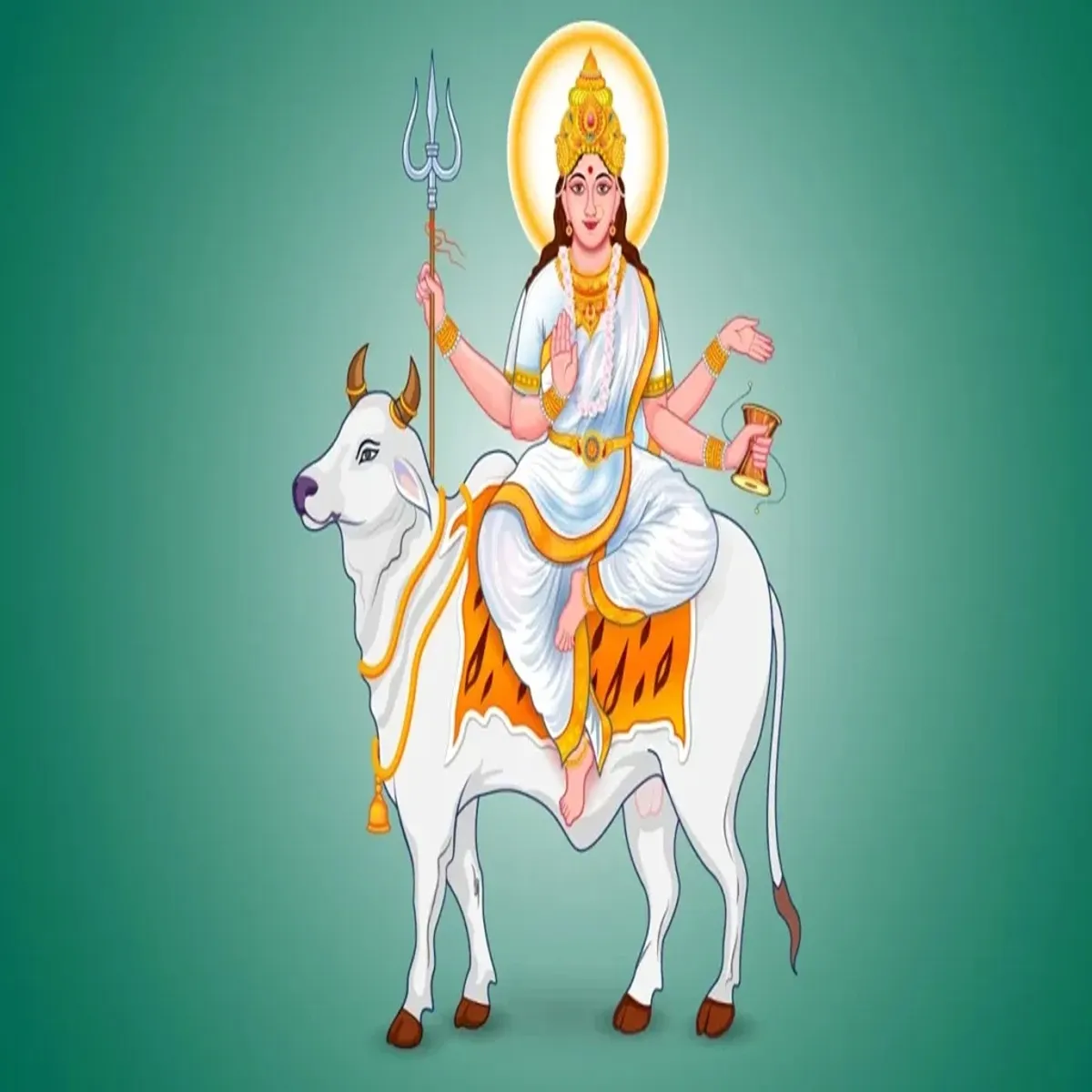
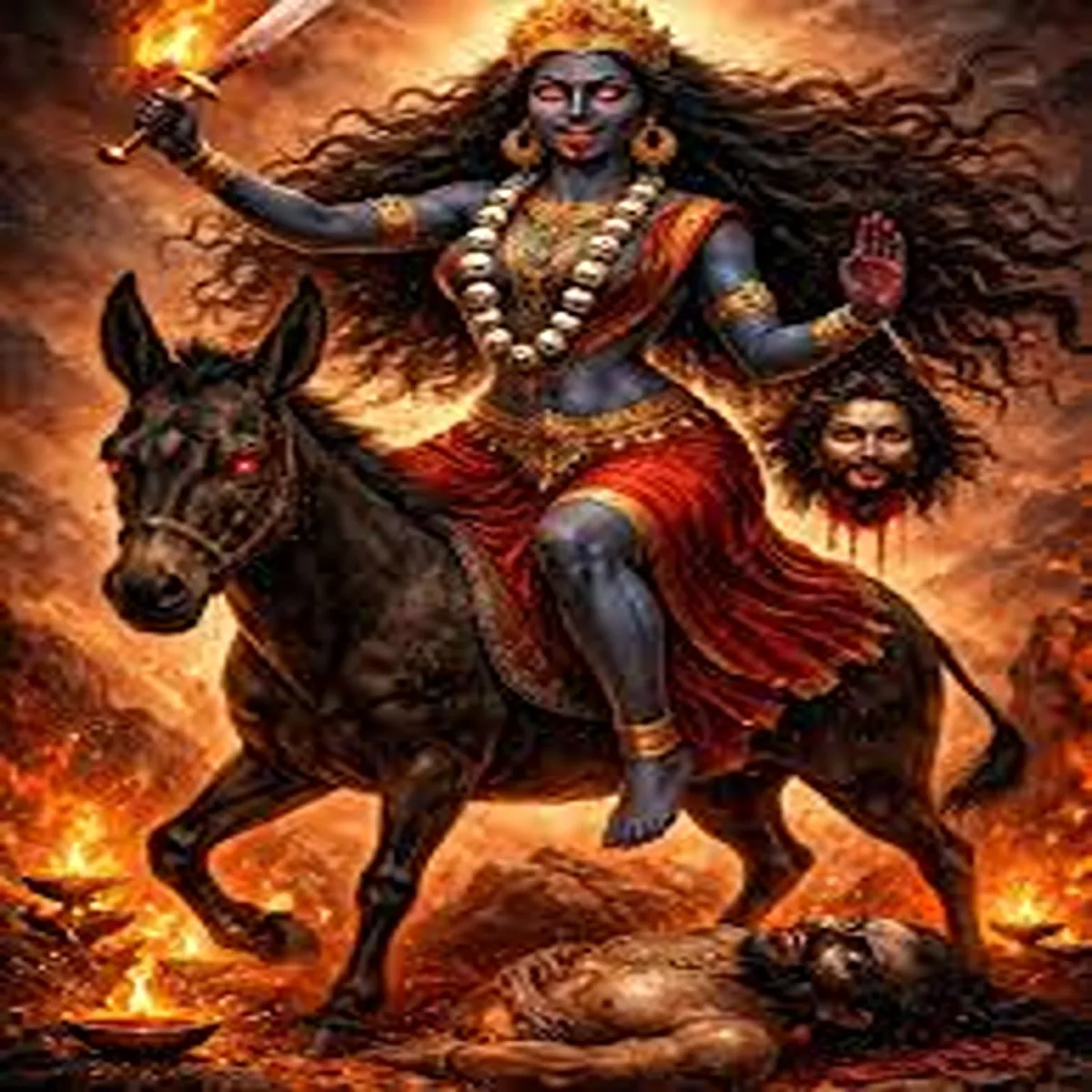
His dominance soon led to the defeat of the gods, forcing them out of heaven. With their authority stripped away, the gods found themselves helpless against his tyranny and sought refuge with the divine trinity—Brahma, Vishnu, and Shiva.
Creation of Goddess Durga
Moved by the suffering of the gods, the trinity and other deities combined their energies to create a powerful divine force—Goddess Durga. She emerged as a radiant and formidable warrior, embodying the collective strength of all gods. Each deity offered her a weapon: Shiva gave his trident, Vishnu his discus, while others contributed swords, bows, maces, and more. Riding a lion, Durga symbolised courage and unwavering determination.
Her arrival marked the beginning of a decisive confrontation that would restore balance in the universe.
The Nine-Day Battle
When Goddess Durga roared, it echoed across the cosmos, signalling the start of an epic war. Mahishasura, enraged by her challenge, marched forward with his massive army. What followed was a relentless battle that lasted nine days and nights.
Mahishasura constantly changed forms—shifting from a buffalo to a lion, then to an elephant—in an attempt to confuse and overpower the goddess. Despite his deceptive tactics, Durga remained unshaken. With precision and strength, she countered every move, proving her unmatched power and resilience.
The Defeat of Mahishasura
On the ninth day, Mahishasura took his most formidable form—a raging buffalo. It was then that Goddess Durga struck decisively. Using her trident, she pierced his heart, bringing an end to his reign of terror. This moment marked the triumph of good over evil, truth over falsehood, and humility over arrogance.
Why Vijayadashami Is Celebrated
The victory of Goddess Durga is commemorated on the tenth day, known as Vijayadashami or Dussehra. This day signifies the restoration of peace and justice, reminding devotees of the enduring power of righteousness.
Navratri is not just a religious observance; it carries a timeless message. It teaches that no matter how strong evil may appear, it cannot withstand the force of truth and virtue. The story encourages individuals to remain steadfast in their values and to believe that justice will ultimately prevail.