Religion – Kartikeya Worship Traditions and Historical References Across Cultures
Religion – Lord Kartikeya holds a prominent place in Hindu belief systems, especially in southern regions of India, where he is widely revered under names such as Murugan and Subramanya. Known for his youthful energy and martial strength, Kartikeya is also referred to as Skanda and Kumara in several classical texts. His influence extends beyond Hindu traditions, with traces of his worship found in Buddhist and Jain practices, as well as in countries like Sri Lanka, Malaysia, and China.
Depictions and Family Lineage
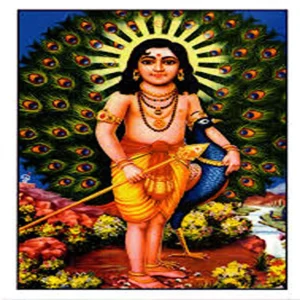
In most traditional portrayals, Kartikeya appears as a radiant young deity, symbolizing courage and vitality. He is widely recognized as the son of Lord Shiva and Goddess Parvati, and the brother of Lord Ganesha. However, ancient scriptures present differing interpretations regarding their birth order. Some texts describe Ganesha as the elder sibling, while others place Kartikeya in that position. These variations highlight the richness of storytelling in Hindu mythology.
Role as a Warrior Deity
Kartikeya is celebrated as the god of war and the commander of divine forces. His presence in early Vedic literature and temple architecture reflects his long-standing importance. Artistic depictions of Kartikeya can be seen in historic sites such as the caves of Ellora and Elephanta, where sculptures and carvings portray his association with divine power and leadership.
Symbolism of Weapons and Mount
One of the most distinctive features of Kartikeya is his association with a spear known as the Vel, which represents wisdom and spiritual awakening. In southern traditions, devotees often refer to him as Vel Murugan due to this symbolic weapon. He is commonly depicted riding a peacock, which signifies victory over ego and desire. In another hand, he carries a flag marked with a rooster emblem.
Mythological Tale of Surapadma
The peacock and rooster symbols are linked to a well-known legend involving the demon Surapadma. According to the story, Kartikeya defeated the demon in battle. When Surapadma sought forgiveness, Kartikeya transformed him into two forms. One became a peacock, which he adopted as his vehicle, and the other turned into a rooster, later used as a symbol on his banner. This narrative emphasizes themes of transformation and redemption.
Scriptural References and Birth Narratives
Ancient scriptures offer multiple accounts of Kartikeya’s birth. The text highlights that in one version found in the Mahabharata, he is born to Shiva and Parvati near the banks of the Ganges. Another narrative from the Vana Parva attributes his origin to the fire god Agni and a celestial being named Swaha. In this version, Kartikeya is described as having six heads, symbolizing his extraordinary abilities.
In the Ramayana, particularly in chapters dedicated to his story, Kartikeya is said to have emerged from the union of Agni and the Ganges. These varying accounts underline the symbolic nature of his birth rather than a single fixed narrative.
Mentions in Vedic and Classical Literature
Kartikeya’s presence can also be traced to early Vedic texts such as the Rigveda, where the term Kumara appears in reference to a youthful divine figure. Descriptions of a radiant boy riding a peacock and holding a spear are often interpreted as references to Kartikeya. Additionally, the Skanda Purana, one of the largest Puranic texts, is entirely dedicated to his legends and teachings.
Other classical works, including Arthashastra, Mahabhashya, and Kumarasambhava, also mention Kartikeya, reflecting his widespread cultural relevance. Tamil literature, particularly the ancient text Tolkappiyam and Sangam poetry, portrays him as Murugan, a red-hued deity associated with youth and valor.
Archaeological Evidence and Cultural Reach
Beyond scriptures, archaeological findings from the Kushan period provide material evidence of Kartikeya’s worship. Coins and artifacts bearing his image have been discovered in various excavations, indicating that his influence extended across regions and time periods.
Religious Significance and Legacy
Kartikeya’s birth is often linked to the defeat of the demon Tarakasura, who had received a boon that only Shiva’s son could destroy him. With Shiva initially detached from worldly affairs, Kartikeya’s birth fulfilled this cosmic purpose. As the commander of divine armies, he embodies bravery, intelligence, and strategic skill.
Today, Kartikeya continues to be worshipped widely, especially in southern India, where festivals and temples dedicated to him attract millions of devotees. His legacy as a warrior deity and symbol of knowledge remains deeply rooted in cultural and spiritual traditions.