Vrindavan Nidhivan Temple : The Living Mystery of Tulsi Trees in Nidhivan, Vrindavan
Vrindavan Nidhivan Temple : Nidhivan in Vrindavan is not just a forest; it is a deeply spiritual landscape that blends devotion, mystery, and centuries-old belief. Among its many sacred elements, the Tulsi trees of Nidhivan stand apart for their unusual physical structure and the legends associated with them. Devotees, saints, and visitors from around the world consider this place a living testimony to divine presence rather than a site explained by ordinary natural laws.
The Sacred Forest of Nidhivan
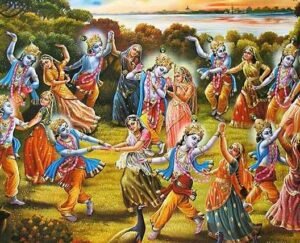
Nidhivan is believed to be the divine playground where Lord Krishna performs Ras Leela with Radha and the Gopis every night. The forest is quiet and serene during the day, yet it carries an intense spiritual energy that many people can feel instantly. Unlike other holy groves, Nidhivan is known for strict traditions, including the belief that no human should remain inside the forest after sunset.
What makes Nidhivan especially unique is the presence of thousands of Tulsi trees that do not resemble normal Tulsi plants found in households or temples. These trees form the spiritual heart of the forest and are considered sacred manifestations rather than ordinary vegetation.
Unusual Physical Structure of the Tulsi Trees
The Tulsi trees in Nidhivan are hollow from the inside, which is highly uncommon for plants of this type. Their roots do not grow deep into the soil like normal trees; instead, the roots remain approximately five millimeters above the ground surface. Despite this, the trees stand firmly without any visible support.
Another surprising aspect is that these trees are never watered by humans. There is no artificial irrigation system, and yet the leaves remain green throughout the year. Even during harsh summers, when surrounding vegetation dries up, these Tulsi leaves retain their freshness. Leaves that appear brown during the daytime are believed to turn green again at night, according to local belief and observation.
Night-Time Transformation and Divine Beliefs
According to devotional traditions, the true miracle of Nidhivan begins after sunset. It is believed that Lord Krishna arrives here every night to perform Ras Leela with the Gopis. During this divine event, the Tulsi trees transform into Gopis themselves. The branches of the trees are said to bend and turn, facing one another, symbolizing participation in the divine dance.
By early morning, it is believed that the Gopis return to their original form as Tulsi trees. This daily transformation is one of the most fascinating spiritual beliefs associated with Nidhivan and is deeply respected by devotees.
Trees That Change Their Position
One of the most discussed mysteries of Nidhivan is the belief that the Tulsi trees change their positions every day. Over time, visitors noticed more than 1600 small holes in the ground, suggesting that the trees do not remain fixed in one place. Curious individuals once tried to test this phenomenon by tying threads around the trees to mark their positions. According to local accounts, these threads were never found again the next day.
This unexplained movement has strengthened the faith of devotees and added to the forest’s mystical reputation. No scientific explanation has fully addressed this phenomenon, making it a subject of spiritual awe rather than logical debate.
Fallen Leaves and Natural Order
Another remarkable aspect is that the leaves of these Tulsi trees never break off forcibly. Leaves fall naturally on their own and are often found collected inside the holes in the ground. This natural order is seen as symbolic of divine discipline and balance within the forest.
Additionally, the Tulsi trees are always found in pairs. Devotees interpret this as a representation of divine companionship, symbolizing Radha and Krishna or the eternal bond between the divine and devotion.
Spiritual Significance and Devotional Respect
For devotees of Krishna, Nidhivan is not a place to question but a place to experience. The Tulsi trees are worshipped with deep reverence, and people follow strict rules while visiting. Photography is restricted in many areas, and silence is encouraged to maintain the sanctity of the forest.
Nidhivan remains a powerful symbol of faith, where belief transcends logic and devotion shapes reality. The Tulsi trees are not merely botanical wonders; they are spiritual entities that continue to inspire awe, surrender, and devotion in the hearts of millions.