Finance – Story of Goddess Lakshmi’s Origin and Divine Union with Vishnu
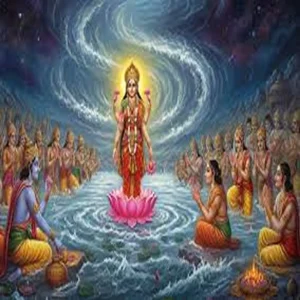
Finance – Goddess Lakshmi holds a central place in Hindu belief as the symbol of wealth, abundance, and well-being. She is traditionally depicted with four hands, each representing different aspects of life. Two hands hold lotus flowers, while the other two are shown in gestures of blessing and generosity. Seated gracefully on a lotus, she is believed to bring prosperity and remove scarcity from the lives of her devotees.
Symbolism and Importance of Goddess Lakshmi
In Hindu tradition, the presence of Goddess Lakshmi is associated with material comfort and spiritual balance. Her blessings are believed to ensure that a household never faces shortages of food, wealth, or peace. The lotus she holds and sits upon symbolizes purity and growth, even in challenging conditions. Her imagery reflects harmony between material success and ethical living.
The Legend of Samudra Manthan
One of the most well-known stories about her origin is linked to the cosmic event known as the churning of the ocean. According to this account, a curse once caused the heavens to lose their prosperity, leaving them vulnerable. Taking advantage of this weakness, powerful forces challenged the celestial beings and defeated them in battle.
Seeking a solution, the gods turned to divine guidance. They were advised to churn the ocean with the help of their rivals to recover lost treasures and restore balance. During this process, many sacred and powerful items emerged from the ocean. Among them was Goddess Lakshmi, who appeared seated on a blooming lotus. Her arrival marked the return of prosperity and harmony.
As the story goes, she chose Lord Vishnu as her eternal companion, symbolizing the union of wealth with preservation and order in the universe.
Alternative Birth Narrative
Apart from the ocean churning story, another tradition presents a different origin of Goddess Lakshmi. In this version, she is described as the daughter of a revered sage and his wife. Born on a full moon night, she was named Lakshmi because of her exceptional qualities and virtues.
This narrative highlights her as part of a divine family, with siblings who also hold significance in mythology. It offers a more personal and familial perspective on her existence, rather than a purely cosmic one.
Devotion and Divine Marriage
As she grew older, Lakshmi is said to have undertaken deep meditation and penance with the desire to be united with Lord Vishnu. Her devotion lasted for years, reflecting her determination and unwavering faith.
In one episode, a divine test was conducted to assess her sincerity. A celestial figure appeared before her disguised as Vishnu and asked her to make a wish. Lakshmi, however, requested to see the universal form, a vision only the true Vishnu could reveal. Unable to fulfill this request, the disguised figure had to withdraw.
Eventually, Lord Vishnu himself appeared and granted her wish, showing his true cosmic form. Impressed by her devotion and purity, he accepted her as his consort. Their union was later formalized through a grand ceremony, symbolizing the eternal partnership of prosperity and preservation.
Lasting Significance in Hindu Belief
Today, Goddess Lakshmi continues to be worshipped across households, especially during festivals associated with wealth and new beginnings. Her stories, whether linked to cosmic events or familial origins, underline the importance of balance, devotion, and ethical prosperity in life.
Her association with Lord Vishnu also reinforces the idea that wealth must coexist with righteousness and stability to create true harmony in the world.