Mythology – Story of Barbarik and His Transformation into Khatu Shyam
Mythology – The story of Barbarik, a lesser-known yet deeply revered figure from the Mahabharata era, continues to hold a special place in devotional traditions across India. Known today as Khatu Shyam, his journey from a powerful warrior to a symbol of faith is rooted in sacrifice, devotion, and divine intervention.
Family Lineage and Ancestral Roots
Barbarik belonged to the lineage of the Pandavas, one of the central families in the Mahabharata. He was the grandson of Bhima, renowned for his immense strength, and the son of Ghatotkacha, who himself was a formidable warrior born to Bhima and Hidimba. Barbarik’s mother, Ahilavati—also referred to in some traditions as Maurvi—played a crucial role in shaping his values and guiding his early life.
This lineage placed Barbarik within a legacy of courage and duty, which would later define his actions on the battlefield.
Birth and Early Traits
According to traditional accounts, Barbarik was born during the Dwapar Yuga, in the time period associated with the Mahabharata. It is said that at birth, his hair was thick and curled, resembling that of a lion. This distinctive feature led to him being named Barbarik.
From a young age, he displayed remarkable strength and intelligence. His abilities were not limited to physical power; he was also known for his discipline and deep sense of purpose, traits that would later define his spiritual journey.
Devotion and Divine Boons
Barbarik’s life took a significant turn through his devotion and penance. Guided by his mother, he undertook intense spiritual practices to seek divine blessings. Pleased by his dedication, Lord Shiva granted him three infallible arrows.
These arrows were believed to possess extraordinary power, capable of determining and destroying targets with unmatched precision. Because of this, Barbarik came to be known as the bearer of three arrows. His strength was such that he had the potential to alter the course of any battle single-handedly.
Before he set out for war, his mother asked him to promise that he would always support the weaker side. Barbarik agreed, a vow that would later become central to his identity and worship.
The Turning Point in the Mahabharata War
As the great war of the Mahabharata approached, Barbarik decided to participate. However, his immense power raised concerns about the balance of the battle. According to tradition, Lord Krishna decided to test Barbarik’s abilities and intentions.
After understanding the full extent of his power and the implications of his vow, Krishna asked Barbarik for a sacrifice. In an act of complete devotion and surrender, Barbarik offered his head without hesitation.
This act of self-sacrifice ensured that the natural course of the war remained undisturbed and upheld the principles of dharma.
Blessing and Emergence as Khatu Shyam
Deeply moved by Barbarik’s sacrifice, Krishna granted him a unique blessing. He declared that in the age of Kaliyuga, Barbarik would be worshipped in his own name, Shyam. This marked the transformation of the warrior into a divine figure of devotion.
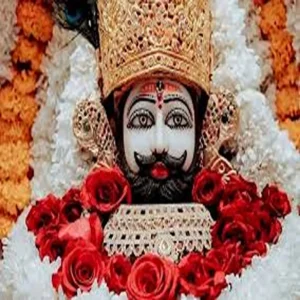
It is believed that Barbarik’s head later appeared at Khatu, a place that has since become a major pilgrimage site. Devotees worship him as Khatu Shyam, often referring to him as the one who supports those in distress, reflecting his lifelong vow to stand by the weaker side.
Enduring Faith and Cultural Significance
Today, Khatu Shyam is worshipped by millions who seek strength, hope, and support in difficult times. His story continues to inspire not just devotion but also values of sacrifice, humility, and commitment to righteousness.
The narrative of Barbarik serves as a reminder that true strength lies not only in power but also in the willingness to uphold principles, even at the cost of personal loss.