KalBhairav – Sacred Legend Behind the Origin of Lord Shiva’s Fierce Form
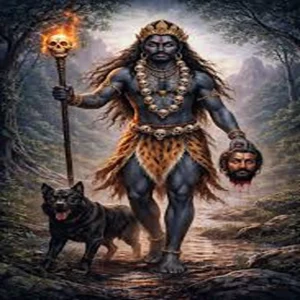
KalBhairav – The observance of Kal Bhairav Jayanti holds deep religious importance in Hindu belief, marking the appearance of Kal Bhairav, a fierce manifestation believed to have emerged from Lord Shiva’s intense anger. This sacred day falls on the eighth day of the Krishna Paksha during the Margashirsha month. According to traditional narratives, Kal Bhairav’s origin is linked to powerful mythological events, with two widely known accounts explaining his emergence. One narrative relates to Lord Brahma, while the other revolves around King Daksha’s pride and its consequences.
Story of King Daksha and Sati’s Marriage
King Daksha, a prominent ruler, was the father of Goddess Sati. Despite her father’s wishes, Sati chose Lord Shiva as her life partner and married him. This decision deeply displeased Daksha, who could not accept Shiva as his son-in-law. His resentment grew over time, eventually leading him to organize a grand yajna (sacrificial ritual). Notably, he deliberately chose not to invite Shiva and Sati, intending to insult them.
When Sati learned about the yajna, she expressed her desire to attend the ceremony. Lord Shiva, however, advised her against going uninvited, explaining that attending such an event without formal invitation was not appropriate, even if it was her parental home. Despite his counsel, Sati insisted, believing that a daughter had every right to visit her father’s house. Determined, she went ahead to attend the ritual.
Insult at the Yajna and Sati’s Sacrifice
Upon arriving at the yajna, Sati witnessed a gathering of numerous deities, sages, and celestial beings. However, the absence of respect toward Lord Shiva was evident. When she questioned her father about the omission, Daksha openly criticized and insulted Shiva. Unable to bear the humiliation directed at her husband, Sati was overcome with grief and anger.
In a moment of deep emotional distress, she chose to end her life by entering the sacred fire of the yajna. This act of self-sacrifice shocked everyone present and marked a turning point in the sequence of events.
Emergence of Kal Bhairav from Shiva’s Anger
Far away, Lord Shiva was in deep meditation when news of Sati’s death reached him. The grief and rage that followed were immense. From this intense fury, Kal Bhairav is said to have manifested. Shiva then directed Kal Bhairav to confront King Daksha and bring an end to his arrogance.
Kal Bhairav appeared at the yajna site in a terrifying form, causing fear among the assembled gods and sages. His presence symbolized divine justice. Without hesitation, he punished King Daksha by severing his head, effectively ending his pride and defiance.
Aftermath and Formation of Sacred Sites
Soon after, Lord Shiva himself arrived at the scene. Seeing Sati’s lifeless body, he was overwhelmed with sorrow. In his grief, he carried her remains and wandered across the universe. This act disrupted cosmic balance, prompting Lord Vishnu to intervene. Using his Sudarshan Chakra, Vishnu divided Sati’s body into multiple parts.
These body parts are believed to have fallen at different locations across the Indian subcontinent, each becoming a revered Shakti Peetha. These sacred sites continue to be important centers of worship. According to religious belief, Kal Bhairav serves as the guardian of these holy places, ensuring their sanctity and protection.
This ancient narrative not only explains the origin of Kal Bhairav but also highlights themes of devotion, respect, and the consequences of arrogance. It remains a significant part of Hindu mythology and is remembered each year during Kal Bhairav Jayanti with devotion and rituals.