Spirituality – The Timeless Journey of Sati and Sacred Shakti Traditions
Spirituality – The story of Mother Sati holds a unique place in Hindu mythology, reflecting themes of devotion, sacrifice, and cosmic balance. Known by many names such as Parvati, Durga, Kali, and Jagadamba, she represents the divine feminine energy that manifests in different forms across time. Her tale is not limited to a single lifetime but is described as a cycle of births and transformations, each carrying deep spiritual meaning.
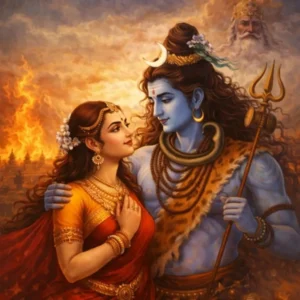
Origins and Many Forms of the Divine Mother
Ancient texts, particularly the Devi Bhagavata Purana, describe multiple manifestations of the Goddess. While it mentions eighteen principal forms, later traditions often expand this understanding by including the nine forms of Durga and the ten Mahavidyas. Together, these representations highlight the diverse aspects of feminine divinity—from nurturing and protective to fierce and transformative. Some interpretations suggest that certain forms are linked to Sati’s later incarnations, while others are connected through familial or symbolic relationships.
Birth of Sati and Her Family Background
According to the Puranas, Sati was born to King Daksha and his wife Prasuti. Daksha, regarded as a powerful Prajapati and a mind-born son of Lord Brahma, is said to have lived in the Himalayan region. His household was vast, with numerous children born to his two wives, Prasuti and Virini. Among them, Sati stood out as a figure of spiritual depth and strong will.
From an early age, Sati was drawn toward Lord Shiva, the ascetic deity who resided on Mount Kailash. Despite her father’s disapproval, she chose Shiva as her husband, valuing his spiritual greatness over worldly expectations. This decision marked the beginning of a conflict that would later shape one of the most significant episodes in Hindu mythology.
Marriage to Shiva and Growing Tensions
Sati’s marriage to Shiva was not welcomed by her father. Daksha viewed Shiva as unconventional and unfit for his daughter due to his austere lifestyle and appearance. This disapproval created a deep divide between father and daughter. However, Sati remained devoted to her husband, embracing her role alongside Shiva with unwavering faith.
Over time, this tension escalated, particularly when Daksha organized a grand yajna (ritual sacrifice). Notably, he chose not to invite Sati and Shiva, a deliberate act that reflected his continued resentment.
The Yajna and Sati’s Sacrifice
Despite Shiva’s reluctance, Sati decided to attend the yajna, believing it was her right as Daksha’s daughter. Upon arrival, she was met with cold indifference and disrespect. More painful than the lack of welcome was the harsh criticism directed at Shiva in her presence.
Unable to bear the humiliation of her husband and the emotional conflict within herself, Sati made a profound decision. Overcome with grief and anger, she immolated herself in the sacred fire of the yajna. This act was not only a response to personal insult but also a symbolic rejection of injustice and dishonor.
Shiva’s Grief and Cosmic Consequences
The news of Sati’s death deeply affected Shiva. In his sorrow and rage, he created Virabhadra, a fierce entity who disrupted the yajna and punished Daksha. Shiva himself entered a state of intense grief, carrying Sati’s body and performing the Tandava, a powerful cosmic dance that threatened to disturb the balance of the universe.
Seeing the growing chaos, Lord Vishnu intervened. To restore order, he used his Sudarshan Chakra to separate Sati’s body into multiple parts, which fell across different regions.
Emergence of Shaktipeeths
The places where Sati’s body parts and ornaments fell became revered as Shaktipeeths—sacred sites dedicated to the Goddess. Various scriptures mention different numbers of these sites, ranging from 51 to 108. Today, around 51 Shaktipeeths are widely recognized and continue to attract devotees from across the world.
Some of these sacred locations are spread across present-day India as well as neighboring countries, including Pakistan, Bangladesh, and Sri Lanka. Their historical and spiritual significance remains deeply valued, even as access to certain sites faces modern challenges.
Enduring Legacy of Sati’s Story
The narrative of Sati is more than a mythological account; it represents enduring values of devotion, dignity, and transformation. Her journey—from a devoted daughter to a powerful symbol of divine energy—continues to inspire spiritual thought and cultural traditions.