Mythology – Ancient Legends Surrounding Daksha Prajapati and His Daughters
Mythology – According to several Hindu scriptures, Daksha Prajapati held an important place in the early creation stories described in the Puranas. He was regarded as one of the mind-born sons of Lord Brahma and was entrusted with responsibilities connected to the expansion of creation. Ancient texts also describe him as a devoted follower of Lord Vishnu. The Matsya Purana provides detailed references to his family lineage, including the birth of his many daughters, who later became linked to several divine and sage dynasties.
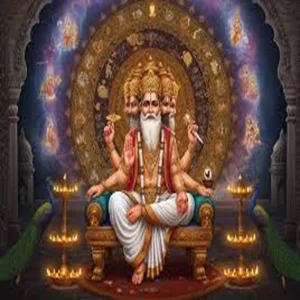
Origins of Daksha Prajapati
Mythological accounts mention that Daksha Prajapati first emerged from the right thumb of Lord Brahma. In another cycle of creation, he was later born as the son of the Prachetas. Religious texts such as the Shrimad Bhagavat Mahapurana describe these two different births in separate cosmic eras. Daksha married Prasuti, the daughter of Swayambhuva Manu, and also Veerani. Both marriages are considered significant in Hindu mythology because many divine lineages are believed to have originated through their children.
The scriptures further mention that Daksha worshipped the eight-armed form of Lord Vishnu with deep devotion. Through divine blessings, he became the father of thousands of children. Some accounts describe the birth of 30,000 sons, while the Matsya Purana highlights that he had a total of 84 daughters. Among them, 24 were born to Prasuti and 60 to Veerani.
Story Behind the Birth of Daksha’s Children
The Matsya Purana explains that before Daksha’s time, living beings were created through spiritual power, thought, sight, and touch alone. However, after Daksha Prajapati began expanding creation, the process shifted toward birth through the union of man and woman. This change is considered a major transition in the mythology of creation.
Lord Brahma instructed Daksha to continue increasing the population of living beings. In response, Daksha first fathered one thousand sons through Panchajani. These sons became known as the Haryashvas. Their role was to continue the work of creation and help expand the universe.
Narada’s Advice Changed Their Fate
Before the Haryashvas could begin their duties, Sage Narada approached them with spiritual guidance. He advised them to travel across the world, understand the true nature and limits of the earth, and search for deeper knowledge before taking responsibility for creation. Influenced by his words, the sons departed in different directions and never returned home.
Daksha later produced another group of sons through Veerani. However, they too followed a similar path after seeking knowledge and understanding the world. Like their elder brothers, they also did not return to continue the task assigned to them.
Birth of Sixty Daughters
After losing hope that his sons would carry forward the responsibility of creation, Daksha Prajapati focused on expanding his lineage through daughters. Religious texts state that Veerani later gave birth to 60 daughters. These daughters were eventually married to several important sages and divine beings.
According to the Matsya Purana, Daksha gave 10 daughters to Dharma, 13 to Sage Kashyap, and 27 to Chandra Dev, the Moon God. Four daughters were married to Arishtanemi, two to Krishashva, two to Shukracharya, and two to Maharishi Angira. Through these marriages, many celestial beings, gods, demons, birds, animals, and human lineages are believed to have originated.
Connection to Lord Shiva
Among Daksha Prajapati’s daughters born through Prasuti, one of the most widely remembered was Goddess Sati. Hindu mythology identifies her as the first wife of Lord Shiva. Her story later became central to one of the most important episodes in Shaivite traditions, especially the events connected to Daksha Yagna.
The relationship between Daksha and Lord Shiva has been discussed in many ancient scriptures and remains an important part of Hindu religious literature. Through these stories, the Puranas continue to preserve beliefs connected to creation, devotion, sacrifice, and divine relationships.