Mythology – Shatrughna Defeats Lavanasura, Restores Peace in Ancient Madhuban
Mythology – The story of Lavanasura’s defeat stands as a significant episode in Indian mythology, reflecting the enduring conflict between righteousness and tyranny. According to traditional narratives, Lavanasura was a powerful demon who ruled over the dense forests of Madhuban, located near present-day Mathura. His reign became synonymous with fear, as his actions disrupted the lives of those living in the surrounding regions.
Origins of Lavanasura and His Rise to Power
Mythological texts describe Lavanasura as the son of a demon named Madhu and a woman believed to be the daughter of a sage called Trinavindu. Madhu himself was known for his cruelty and was ultimately slain by Lord Vishnu due to his oppressive deeds. Following his father’s death, Lavanasura inherited control over Madhuban and quickly established dominance in the region.
With immense strength and a fierce disposition, Lavanasura began to terrorize nearby settlements. What was once a peaceful and thriving forest gradually turned into a place of dread. Residents lived under constant threat, unable to carry out their daily lives without fear of violence. Over time, Lavanasura’s reputation as a ruthless and unstoppable force spread far and wide.
Growing Distress in the Region
As Lavanasura’s influence expanded, the condition of the people worsened. Villages near Madhuban experienced frequent disturbances, and the absence of order created instability in the region. The natural beauty and prosperity of the forest were overshadowed by the demon’s unchecked authority.
Accounts suggest that sages and local inhabitants sought relief from this oppression. Their appeals eventually reached the royal circles, where the need for intervention became clear. The situation called for a decisive response to restore peace and ensure the safety of the people.
Shatrughna’s Mission to Confront Lavanasura
Shatrughna, the youngest brother of Lord Rama and a prince of Ayodhya, was entrusted with the responsibility of confronting Lavanasura. Acting upon the request of revered sages, he prepared to face the formidable demon. This mission was not only a test of strength but also a duty aligned with the principles of justice and protection.
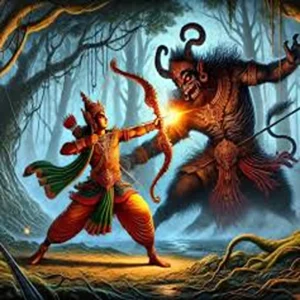
Shatrughna approached the task with careful planning. Armed with divine weapons granted through his lineage and guidance, he engaged Lavanasura in a fierce battle. The encounter was intense, reflecting the strength and determination of both sides. However, Shatrughna’s skill and discipline ultimately proved decisive.
Through strategic use of his weapons and unwavering focus, Shatrughna succeeded in defeating Lavanasura. The fall of the demon marked the end of a long period of suffering for the people of the region.
Restoration of Peace in Madhuban
Following Lavanasura’s defeat, Madhuban witnessed a transformation. The fear that once gripped the area began to fade, and normal life gradually resumed. The forests, which had been neglected and overshadowed by violence, started to regain their natural harmony.
Shatrughna played a key role in ensuring stability after the conflict. He took steps to rebuild the region and provide a sense of security to its inhabitants. His actions were not limited to the battlefield; they extended to governance and reconstruction as well.
Foundation of a New City
One of the most notable outcomes of this episode was the establishment of a new settlement in the region. Shatrughna is believed to have founded a city on the site of Madhuban, which later came to be known as Mathura. This development symbolized renewal and the triumph of order over chaos.
The creation of Mathura marked a turning point, transforming a once-troubled area into a center of culture and stability. It also reinforced the idea that the removal of injustice can pave the way for growth and prosperity.
Enduring Significance of the Story
The account of Lavanasura’s defeat continues to hold relevance in cultural and moral discussions. It emphasizes the importance of standing against wrongdoing and highlights the role of leadership in protecting society. Shatrughna’s actions are remembered as an example of courage combined with responsibility.
This narrative serves as a reminder that even in the face of overwhelming adversity, the principles of justice and determination can lead to meaningful change. The transformation of Madhuban into a peaceful and thriving region remains a powerful symbol of hope and resilience.