Pilgrimage – Sacred Story Behind Ganga Dussehra and River Ganga’s Descent
Pilgrimage – For millions across India, the River Ganga is far more than a flowing waterway. It is regarded as a sacred symbol of faith, purity, and spiritual liberation. From the northern plains to the southern states, the river has long represented a cultural connection that binds the country together. Ancient beliefs associated with the holy river continue to influence religious traditions, especially the belief that a few drops of Ganga water at the final moments of life help a soul attain salvation.
Significance of Ganga Dussehra in 2026
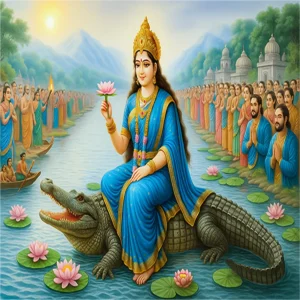
The festival of Ganga Dussehra will be observed on May 25, 2026. According to Hindu tradition, this day marks the descent of Goddess Ganga from heaven to Earth during the Dashami tithi of Shukla Paksha in the month of Jyeshtha under the Hasta Nakshatra. Devotees consider the occasion an opportunity not only for ritual bathing but also for inner reflection and spiritual cleansing.
On this day, pilgrims gather along riverbanks to offer prayers, seek forgiveness for past mistakes, and pledge to follow a righteous path in life. Religious ceremonies, charity activities, and holy dips in the Ganga form an important part of the celebrations across several states.
Ancient Legend Linked to King Sagar
The story associated with the arrival of Ganga on Earth begins in the ancient kingdom of Ayodhya, ruled by King Sagar. Historical scriptures describe him as a powerful ruler who had expanded his influence across many regions. King Sagar had two queens — Keshini and Sumati. While Keshini had one son named Asamanjas, Sumati was the mother of sixty thousand sons.
To establish his supremacy and authority, King Sagar organized the Ashwamedha Yajna, a grand Vedic ritual involving a ceremonial horse. However, the success of the ritual worried Indra, the king of the gods. Fearing that Sagar’s growing power might challenge heaven, Indra secretly stole the horse and left it near the hermitage of Sage Kapila, who was deeply engaged in meditation at the time.
The Curse of Sage Kapila
When the royal horse disappeared, King Sagar’s sixty thousand sons began searching across the land. Their search eventually led them to Sage Kapila’s ashram, where they found the horse grazing nearby while the sage remained immersed in meditation.
Mistaking the sage for the thief, the princes accused him loudly and disrupted his penance. Disturbed by the chaos, Sage Kapila opened his eyes in anger. According to mythology, the intense spiritual energy released from his gaze instantly reduced all sixty thousand princes to ashes.
Search for Salvation of the Ancestors
After the princes failed to return, King Sagar’s grandson Anshuman went in search of them. Upon reaching the hermitage, he learned the truth from Garuda, the celestial eagle. Garuda explained that the souls of the deceased princes could attain peace only if the sacred waters of the heavenly Ganga touched their ashes.
Anshuman completed the Ashwamedha ritual after recovering the horse, but despite years of penance, he could not bring Ganga to Earth. His son Dilip also continued the effort without success.
Bhagirath’s Penance Changed Destiny
Generations later, King Bhagirath resolved to fulfill the unfinished mission of his ancestors. He undertook severe meditation and spiritual austerities at Gokarna Tirtha for several years. Pleased with his devotion, Lord Brahma finally appeared before him and offered a boon.
Bhagirath requested that Goddess Ganga descend to Earth so his ancestors could attain salvation. Brahma agreed but warned that the Earth would not be able to withstand the immense force of Ganga’s descent from heaven. He advised Bhagirath to seek the support of Lord Shiva, the only deity capable of controlling the river’s powerful flow.
Lord Shiva’s Role in Ganga’s Arrival
Determined to succeed, Bhagirath worshipped Lord Shiva with deep devotion. Shiva accepted the request and captured the mighty river within his matted locks to soften her force before releasing her gently onto Earth.
After flowing peacefully from Shiva’s hair, the sacred river followed Bhagirath, eventually reaching the ashes of King Sagar’s sons and granting them liberation. Because of Bhagirath’s extraordinary determination and dedication, another revered name for the River Ganga became “Bhagirathi.”