Spirituality – Parashurama Jayanti Marks Legacy of Warrior Sage in Hindu Tradition
Spirituality – Parashurama Jayanti is observed on the third day of the bright fortnight of the Vaishakha month and is dedicated to Lord Parashurama, who is regarded in Hindu tradition as the sixth manifestation of Lord Vishnu. The occasion commemorates the life and deeds of the revered warrior sage, whose story occupies a significant place in ancient scriptures and religious beliefs. In 2020, the festival was observed on April 26, drawing attention to the enduring influence of Parashurama across generations.
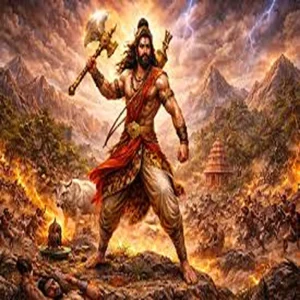
Traditions Surrounding His Birth
According to traditional accounts preserved by various scholars and religious texts, Lord Parashurama was born during the transition period between Satya Yuga and Treta Yuga. He is believed to have been born to Sage Jamadagni and Renuka in the lineage of the great sage Bhrigu. Historical and mythological narratives describe his birth as occurring under specific celestial conditions that are considered highly auspicious in Hindu astrology.
Parashurama belonged to a respected family of sages. His father, Jamadagni, was the son of Sage Richika and Satyavati. Ancient traditions also associate Satyavati with the royal family of King Gadhi, linking Parashurama to several prominent figures mentioned in Hindu literature.
Different Beliefs About His Birthplace
Several regions across India are associated with the birthplace of Lord Parashurama. One tradition identifies Khairadih in present-day Ballia district of Uttar Pradesh as the location of his birth, citing historical and archaeological references. Other beliefs connect his birth to Janapav Hill near Mhow in Madhya Pradesh. Additional traditions point to Kalcha village in Chhattisgarh’s Surguja region and an ancient site near Jalalabad in Uttar Pradesh. These varying accounts reflect the widespread reverence for Parashurama throughout the country.
Education and Renowned Disciples
Religious texts describe Parashurama as a master of both spiritual knowledge and martial arts. He is believed to have received guidance from Sage Richika, Sage Jamadagni, Sage Vishwamitra, and Lord Shiva. His expertise extended to the Vedas, statecraft, yoga, and the use of divine weapons.
Parashurama is also remembered as a legendary teacher. Ancient epics credit him with imparting military training to some of the most celebrated warriors of the Mahabharata era, including Bhishma, Dronacharya, and Karna.
The Story of Renuka and Jamadagni
One of the most widely discussed episodes in Parashurama’s life concerns a command given by Sage Jamadagni. According to traditional narratives, Jamadagni instructed his sons to carry out a severe order concerning their mother, Renuka. While the elder brothers refused, Parashurama obeyed his father’s command. Pleased by his obedience, Jamadagni granted him a boon. Parashurama then requested that his mother be restored to life and that his brothers regain their former state. The wish was granted, and the family was reunited.
Conflict With the Haihaya Dynasty
Parashurama’s name is closely associated with his conflict against rulers of the Haihaya lineage. Historical and mythological traditions describe tensions between Sage Jamadagni’s family and King Sahasrarjuna. The dispute is often linked to matters involving the divine cow Kamadhenu and other longstanding disagreements.
The conflict intensified after Jamadagni was killed by members of the Haihaya clan. Deeply affected by the tragedy, Parashurama launched a series of campaigns against those he held responsible. Many traditional accounts state that he defeated numerous Haihaya rulers and their allied dynasties. Scholars and researchers often note that these campaigns were directed against specific ruling groups rather than all Kshatriyas.
Presence Across Different Yugas
Stories connected to Parashurama appear in several Hindu epics. In one well-known account, he encountered Lord Ganesha, leading to the episode associated with Ganesha’s single tusk. During the Treta Yuga, Parashurama is said to have met Lord Rama at the time of Sita’s swayamvara. In the Dvapara Yuga, traditions connect him with Lord Krishna and the great warriors of the Mahabharata period.
Belief in His Immortality
Parashurama is counted among the revered Chiranjeevis, beings believed to remain alive through the ages according to Hindu belief. Religious traditions state that he continues his penance and spiritual practices, often associating his presence with the Mahendragiri mountains. Devotees believe that his legacy of discipline, knowledge, and devotion remains relevant even today, making Parashurama Jayanti an important observance in Hindu culture.