Festival – Yama Dwitiya Tradition Linked to Ancient Story of Chitragupta
Festival – The significance of Yama Dwitiya, a revered observance in the Hindu calendar, is described in an ancient dialogue between Yudhishthira and Bhishma. According to the traditional account, Yudhishthira sought to understand the spiritual value and rewards associated with the observance. In response, Bhishma explained the origins of the sacred day and narrated a detailed Purana-based account connected with Dharma Raja and Chitragupta.
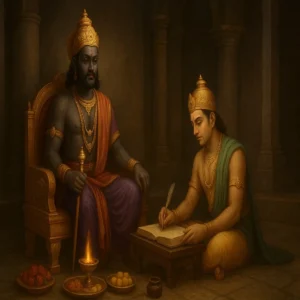
Ancient Narrative Explains the Origin
Bhishma stated that Yama Dwitiya is observed on the second lunar day of the bright fortnight of Kartik and is also associated with a similar observance during the dark fortnight of Chaitra. While explaining its importance, he referred to the early stages of creation. The account describes how Lord Narayana instructed Brahma to create the universe and establish living beings. Brahma subsequently brought forth different forms of life, divine beings, sages, and various classes of society.
As creation expanded, Brahma entrusted Dharma Raja with the responsibility of ensuring that every individual received the results of their actions according to divine law. However, Dharma Raja expressed concern about managing the countless deeds performed by living beings across different places and times.
Creation of Chitragupta
Recognizing the complexity of this responsibility, Brahma contemplated a solution. After a long period of meditation, a wise and capable being emerged from his own form. This individual possessed exceptional knowledge and the ability to record the actions of all creatures.
Brahma named him Chitragupta and assigned him the role of assisting Dharma Raja by maintaining records of human deeds. Chitragupta was entrusted with documenting both virtuous and wrongful actions so that justice could be administered fairly.
Divine Blessings and Family Lineage
The narrative further explains that Chitragupta devoted himself to the worship of the Divine Mother and performed intense spiritual practices. Pleased with his devotion, the goddess granted him blessings, including long life and stability in carrying out his responsibilities.
Later, Chitragupta was married and became the father of several sons. Traditional accounts associate these descendants with various communities and regions across the Indian subcontinent. The story highlights how different family branches spread to several areas and became well known in later generations.
Story of King Saudasa
A major part of the account focuses on King Saudasa, who was known for engaging in wrongful conduct throughout his life. During a hunting expedition, he encountered a Brahmin performing worship dedicated to Dharma Raja and Chitragupta on the occasion of Yama Dwitiya.
Curious about the ritual, the king learned about the observance and decided to participate. He offered prayers with devotion and observed the fast according to the prescribed method. Although he later forgot about the practice for some time, he eventually performed it again after recalling its significance.
When the king died, he was brought before Dharma Raja for judgment. Chitragupta reviewed the record of his actions and acknowledged the many mistakes committed during his lifetime. However, he also noted the sincere observance of Yama Dwitiya and the worship offered to Dharma Raja and Chitragupta. Because of that act of devotion, the king was spared severe punishment and was granted a favorable spiritual outcome.
Rituals Associated With the Observance
After hearing the story, Yudhishthira asked how devotees should properly observe Yama Dwitiya. Bhishma explained that worshippers should establish representations of Dharma Raja and Chitragupta in a clean and sacred place. Offerings may include flowers, fruits, sweets, incense, lamps, betel leaves, and charitable gifts.
The observance also includes honoring writing instruments such as pens and inkpots, symbolizing Chitragupta’s role as the divine recorder of human actions. Listening to the sacred narrative and expressing respect toward siblings are also considered important aspects of the day.
According to the traditional belief described by Bhishma, those who observe Yama Dwitiya with sincerity, devotion, and respect for dharma are believed to receive blessings, family prosperity, and fulfillment of righteous aspirations.