Spirituality – Vallabhacharya’s Teachings Continue Inspiring Krishna Devotees Across India
Spirituality – Mahaprabhu Vallabhacharya is remembered as one of the most influential spiritual scholars of the Bhakti movement, whose teachings shaped a distinct path of Krishna devotion in India. Born in a Telugu Brahmin family to Lakshman Bhatt and mother Illamma, Vallabhacharya is believed to have taken birth in Vikram Samvat 1535 in the region that is now associated with Raipur in present-day Chhattisgarh. He was the second son in the family and spent his childhood in a deeply religious atmosphere surrounded by devotees of the Bhagavata tradition.
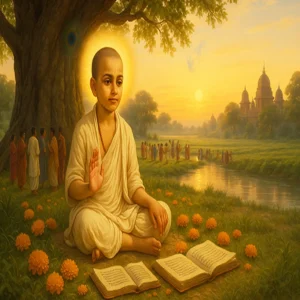
At a very young age, Vallabhacharya displayed remarkable intellectual abilities. Historical accounts state that he completed his studies of Vedic scriptures and philosophical texts under the guidance of renowned scholar Madhavendra Puri in Kashi when he was only 11 years old. His mastery over scriptures later helped him establish a philosophical tradition that earned a unique place among Vedanta schools.
Foundation of the Pushtimarg Tradition
Vallabhacharya introduced the doctrine of Shuddhadvaita, or pure non-dualism, which became the philosophical foundation of the Vaishnav tradition he propagated. He wrote several important commentaries and texts, including works on Vedanta Sutras and interpretations related to the Bhagavad Gita. His explanations became widely respected among followers of Krishna devotion.
The devotional path associated with his teachings later came to be known as Pushtimarg. According to this tradition, divine grace is attained through complete surrender to God with sincerity and dedication. Vallabhacharya emphasized that true devotion requires the offering of one’s mind, heart, actions, and material life to the service of the divine.
Krishna Worship Through Love and Devotion
A major part of Vallabhacharya’s spiritual life was devoted to the worship of Lord Krishna in his child form. He spent considerable time in Vrindavan, where he promoted loving devotion filled with affection and emotional connection. His style of worship, known for its detailed daily rituals and devotional music, highlighted the tender relationship between devotee and deity.
Followers believe that his deep spiritual discipline and devotion earned him divine blessings. Traditions associated with his life mention that Lord Krishna assured him that sincere devotees who follow the path of faith and discipline would always remain under divine protection. Even while living a householder’s life, Vallabhacharya continued to practice devotion with simplicity and emotional depth, inspiring many people to embrace Krishna bhakti.
Influence on Bhakti Literature
Vallabhacharya also played a significant role in shaping devotional literature during the Bhakti era. He guided poet Surdas toward Krishna devotion and encouraged him to compose verses describing the childhood pastimes of Lord Krishna. These compositions later became an important part of Indian devotional culture and are still sung by devotees across the country.
In addition to philosophical writings, Vallabhacharya composed several hymns, commentaries, and devotional texts. Sixteen of his important works are collectively known as the Shodash Granth. These include Yamunashtak, Balbodh, Siddhant Rahasya, Bhaktivardhini, Krishnaashray, and Sevaphal among others. His writings continue to hold spiritual significance for followers of the Pushtimarg tradition.
Continuing Relevance of His Teachings
Religious scholars often place Vallabhacharya among the great spiritual figures of India, alongside Adi Shankaracharya, Ramanujacharya, Madhvacharya, and Nimbarkacharya. His teachings strengthened the Bhakti movement by making devotion accessible to common people through love, faith, and surrender rather than rigid rituals alone.
Supporters of the Pushtimarg tradition believe that Vallabhacharya’s message remains relevant even today, especially at a time when social and moral challenges continue to affect human life. His teachings encouraged people to remain connected with spiritual values and lead a balanced life rooted in compassion, discipline, and devotion.